The Camera
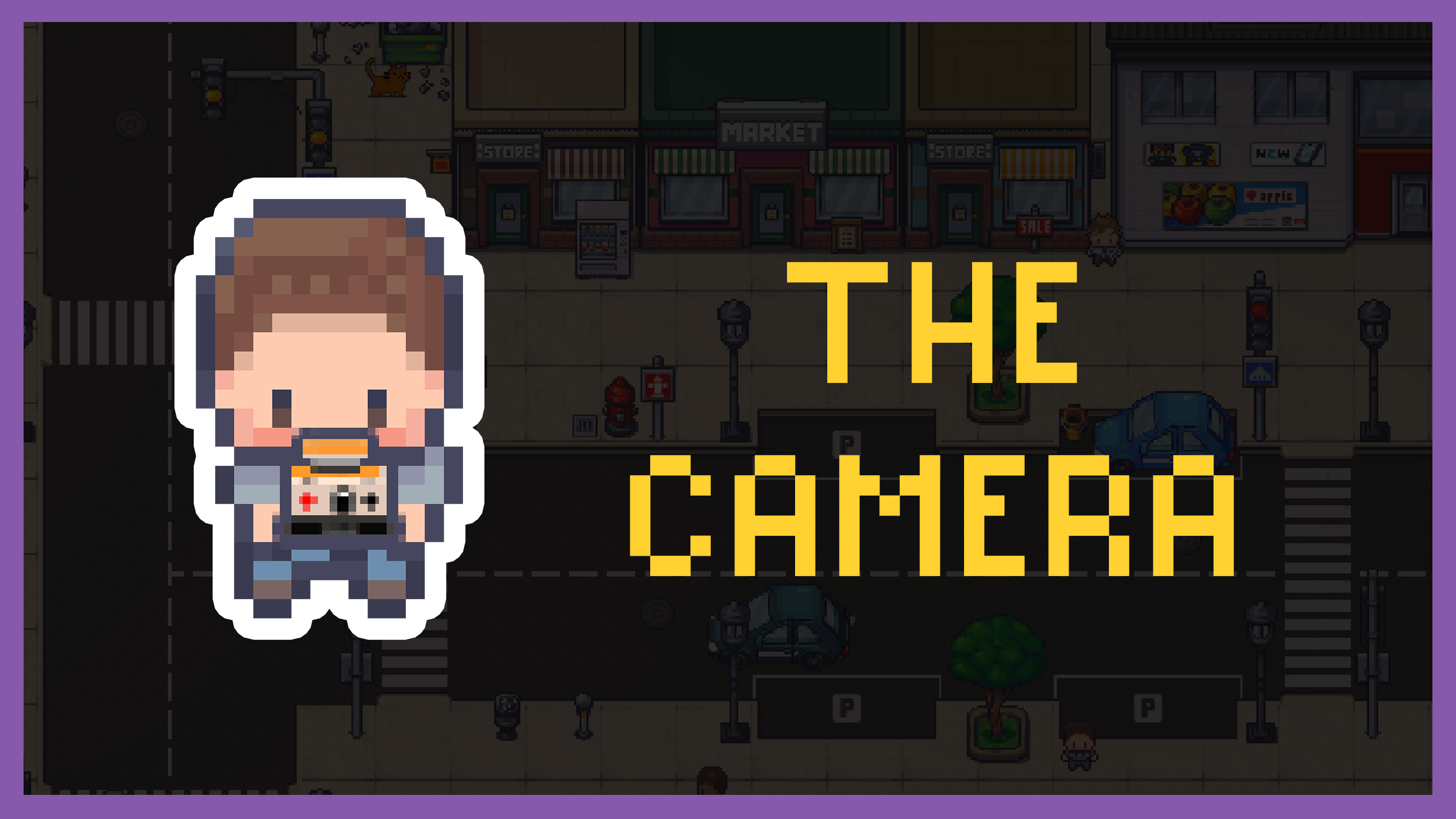
The Camera brings players into the protagonist Tim with the first viewpoint to comprehend the story and the inner world of autistic children, to bring players emotional empathy, advocate against school bullying, and encourage everyone to treat people with autism equally.
The player assumes the role of Tim, an autistic child who receives a magic camera by chance. He makes friends and gains understanding from his classmates with the help of the camera.
- ROLE
- Personal Project
- TEAM SIZE
- 1 (Solo)
- ENGINE
- Unity · PC
- DURATION
- 3 months
 Google Drive
  itch.io
What I Learned From This Project?
Main Contributions
-
Game Script Writing: Authored an extensive game script spanning over 20 pages, meticulously crafting the narrative and dialogue to enhance player engagement and storyline depth.
-
Full Game Production: Demonstrated comprehensive expertise in game development by utilizing Unity and C# to complete all aspects of the project. This included the design and implementation of scenes, animations, and programming, ensuring a seamless and interactive gaming experience.
Key Features
Inspiration & Research
My concern for autistic people and school bullying inspired this game.



Setting of the Story
The 90s, Small Town, No Social Network, Fictional Plot
The setting is used by the game to strengthen the bond between the protagonist Tim and those around him, but it also serves to exacerbate the ridicule, coldness, and loneliness he faces as a result of his autism.
Characters

Tim
Main Character: Introverted, Autistic but Longing for Friends
Tim was diagnosed with autism at the age of 3. It is difficult for him to express his emotions and speech, and he struggles with severe social interaction difficulties. As a child, his mother gave him a camera on his birthday; he has been taking photography as a hobby ever since. Because of his autism, he is not popular among his classmates at school. His only friend in school is Billy.
Character Arc
At the beginning of the story, Tim is unable to understand people’s thoughts due to his autism, is afraid to communicate with people, and is left isolated and helpless. Through a series of events, he learns how to communicate with people and becomes friends with his classmates, overcoming the social barriers that come with autism.


Billy
Supporting Character: Solitary, Kind but Jealous
Billy’s family is not well off, and he is often abused by his father. He behaves strangely, treats things with disinterest, is quick to lose his temper, and is jealous of those who are happy. He has a good heart but cannot express it and is afraid of being slighted. No classmates are willing to play with him at school. He has no choice but to talk to Tim about his emotions.
Character Arc
Influenced by his family since childhood, Billy is used to solving problems with violence and is jealous of happy people. No classmate at school wants to talk with him. When the camera becomes possessed, he stands up and defeats it. His bravery earns him the recognition of his classmates — he comes to understand that he cannot treat people with violence and must make friends sincerely.


Magic Camera
Villain · Final Boss
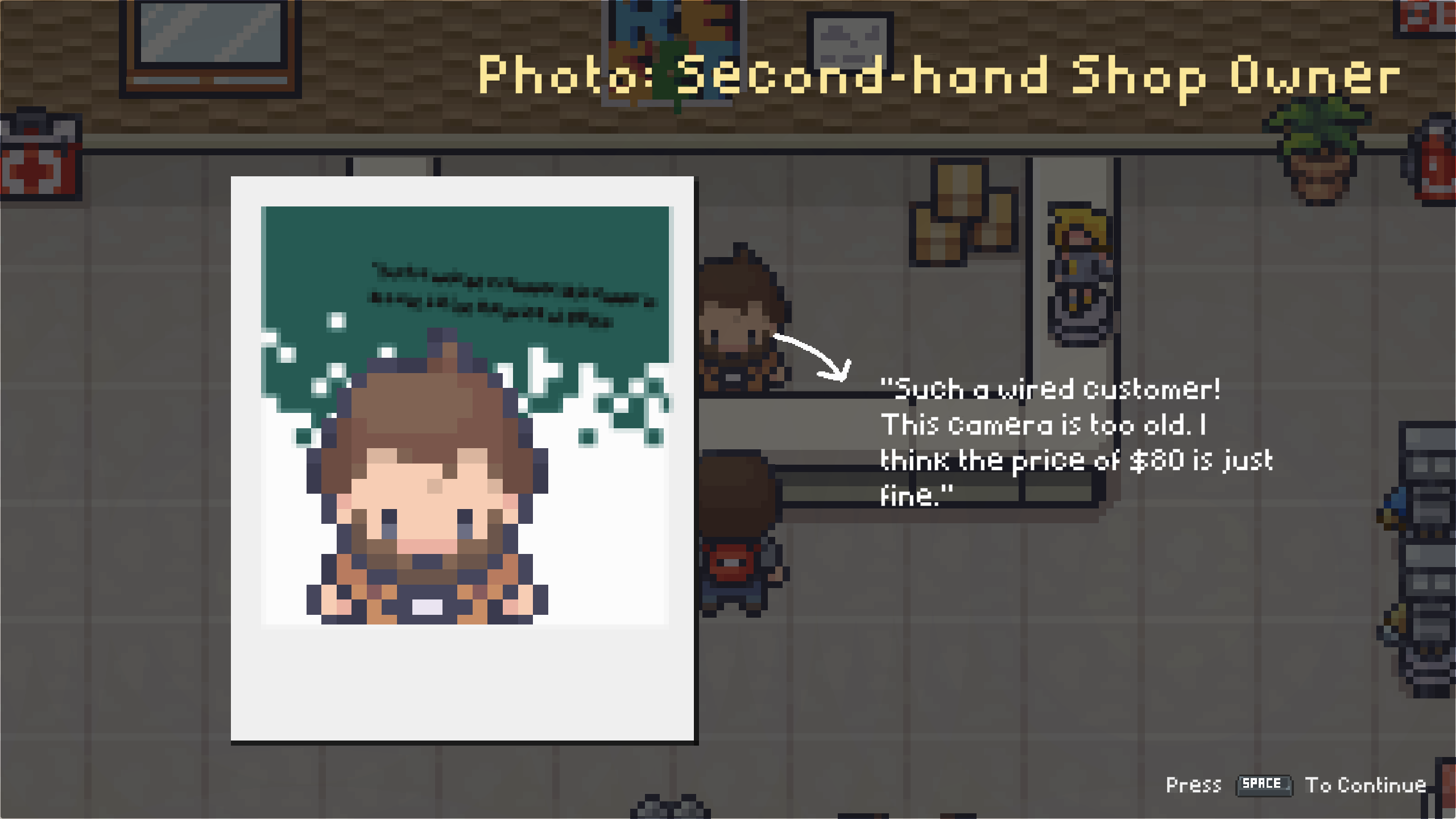
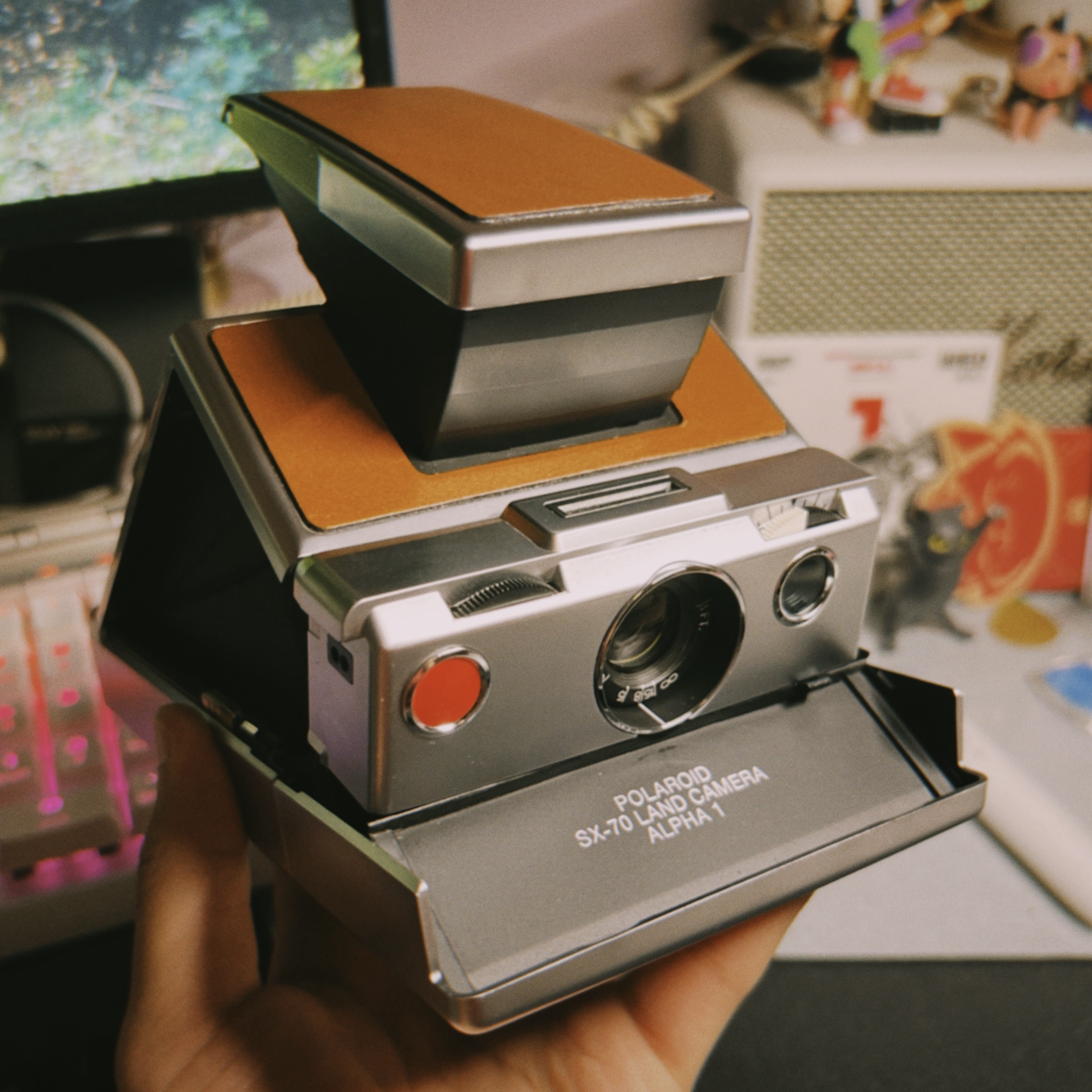
A magic camera. It reads the thoughts of the person being photographed and writes them on the printed photos, which can only be seen by the person taking the photo. After being photographed by it, the negative emotions in people’s minds will be amplified and they will become very error-prone. After accumulating enough energy, the camera turns demonic and wants to devour everyone.
Story Structure
 The Camera Plot Outline
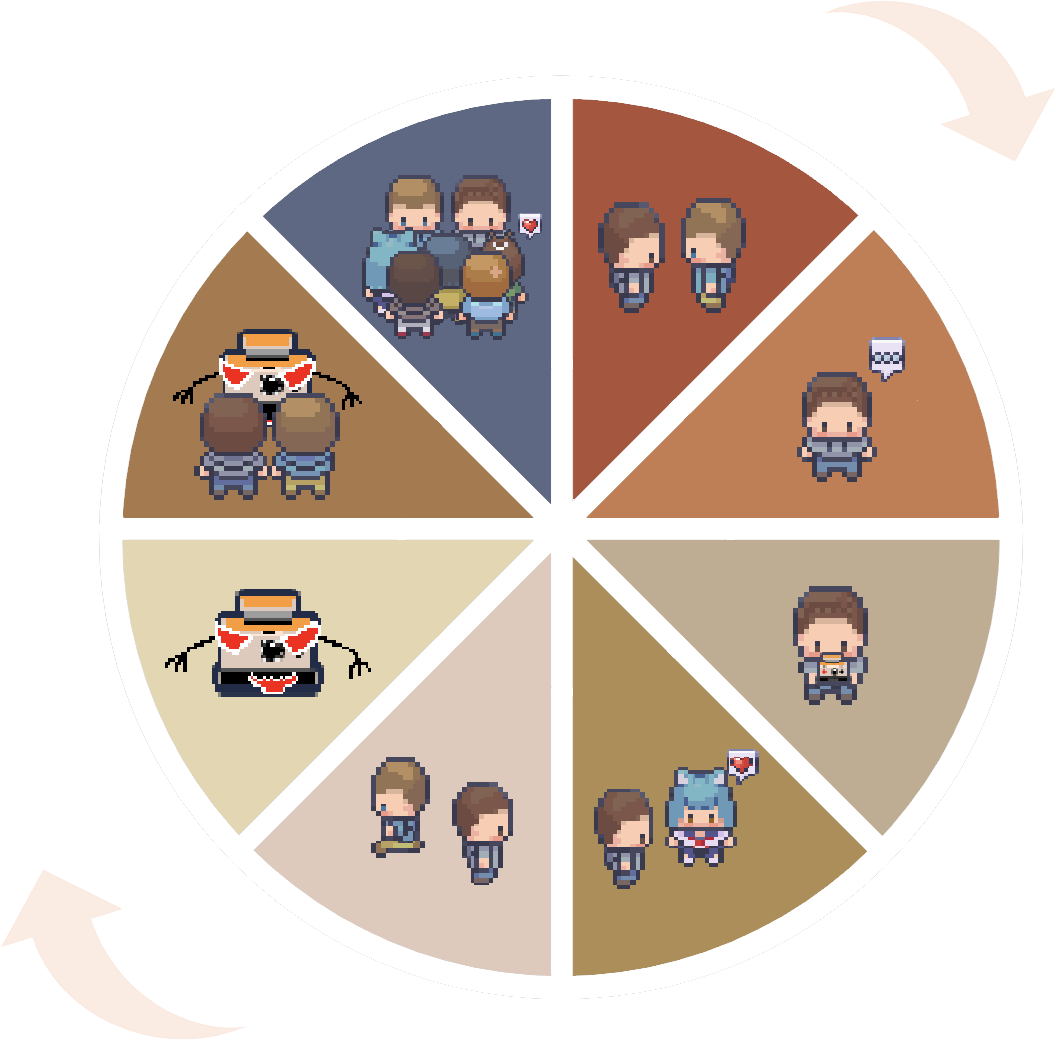
GAME’S “STORY CIRCLE”
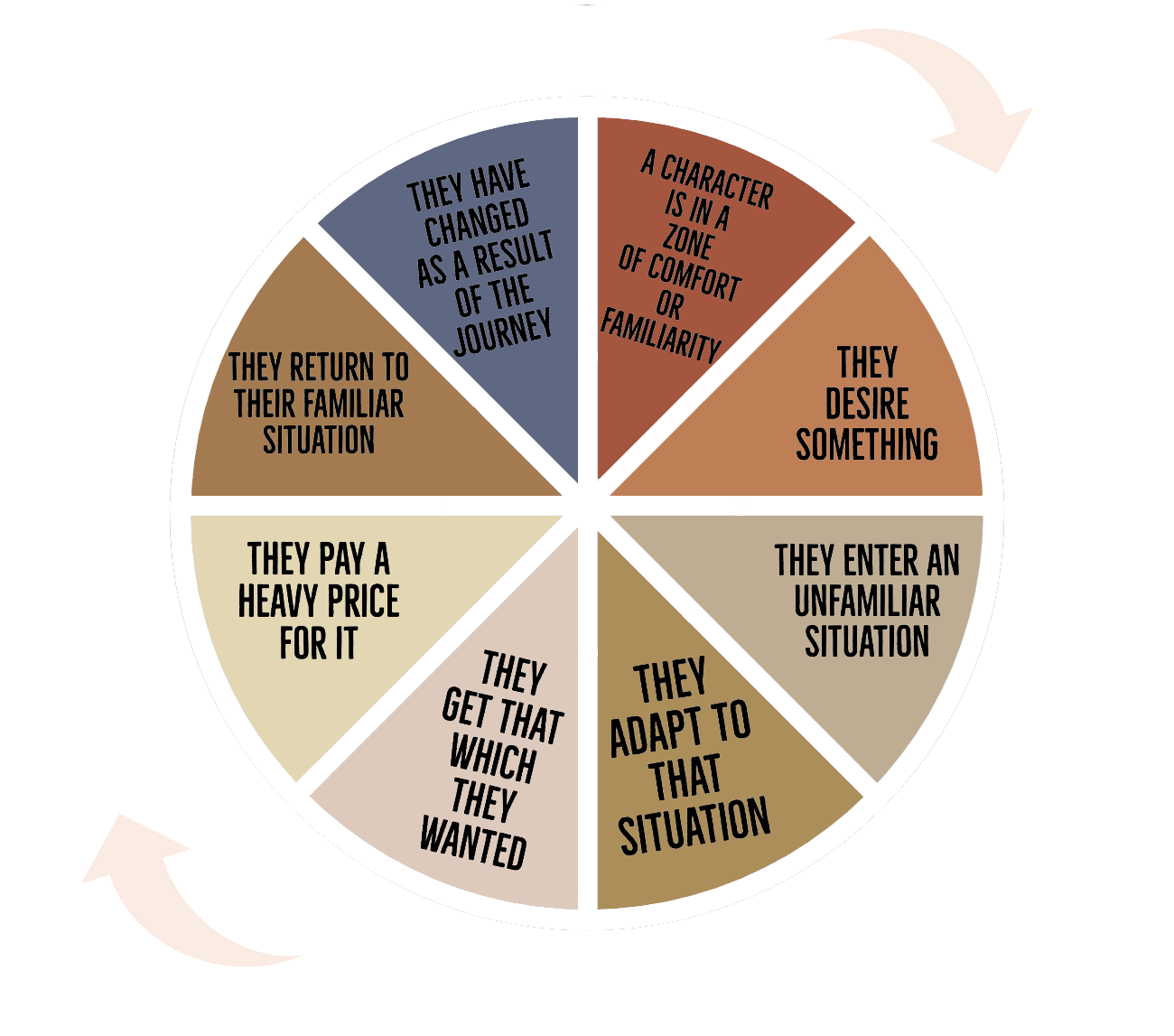
DAN HARMON’S “STORY CIRCLE”
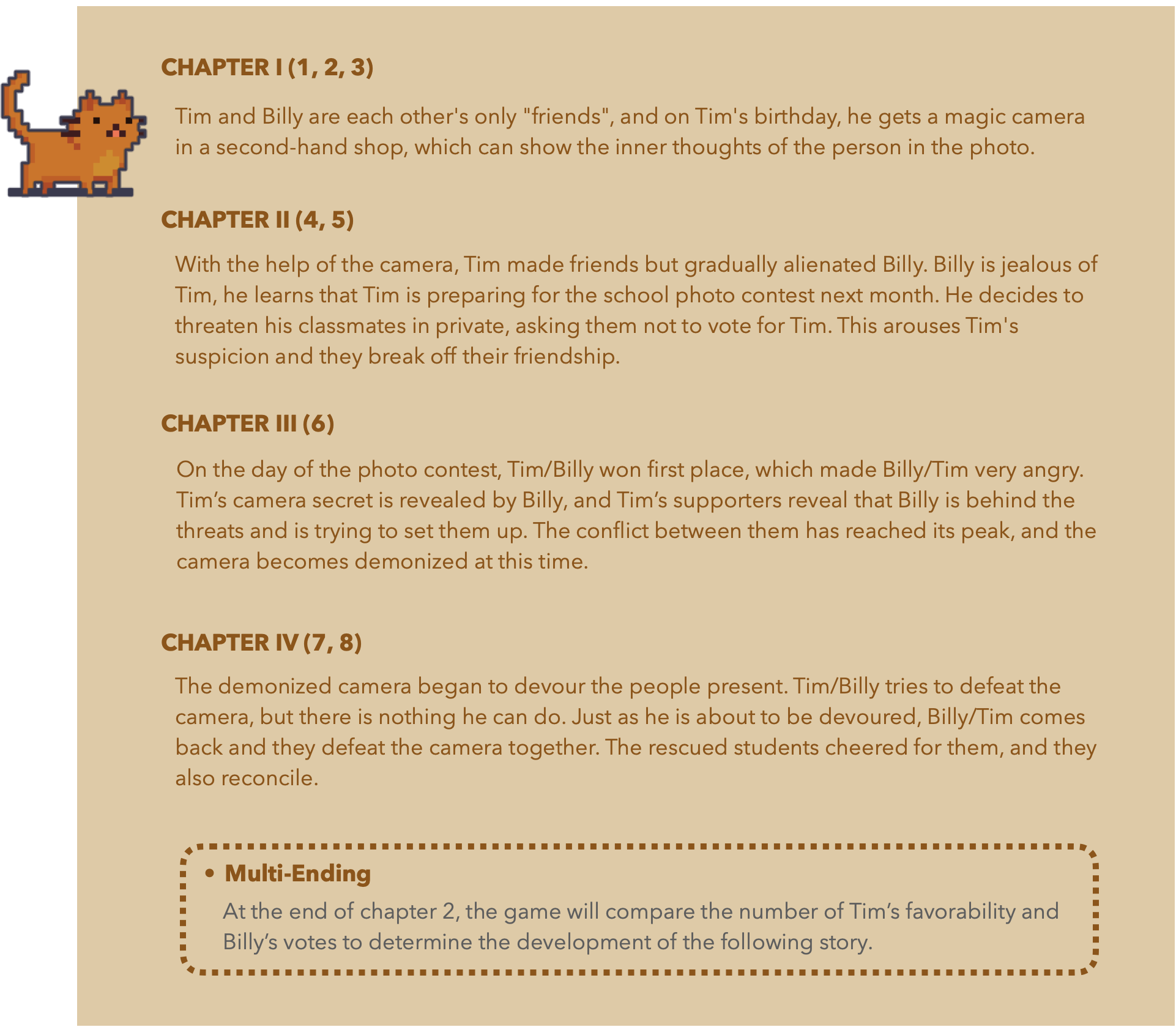
- Tim, who has autism, is unable to communicate with others, and Billy is his only friend.
- He wishes to make friends.
- He obtains a magical camera that can read other people’s minds.
- Tim employs the magic camera to assist his classmates.
- Tim becomes well-known, but he loses his best friend Billy.
- The camera becomes possessed and wants to devour everyone.
- Tim and Billy team up to defeat the camera.
- They are accepted and make friends with their classmates.
Story Content
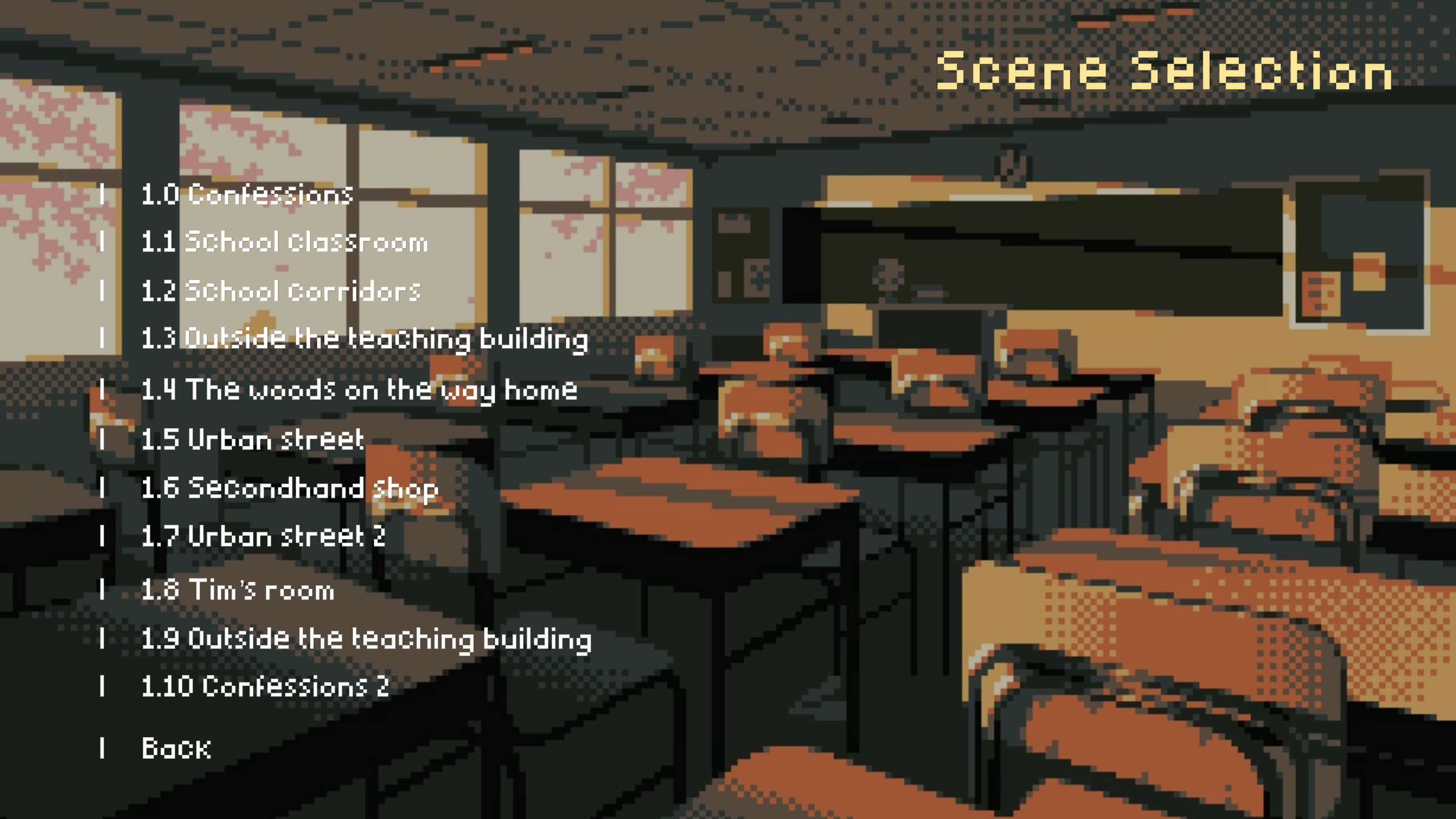
There are four chapters in the game.
Scene Design
The Camera Script Chapter I
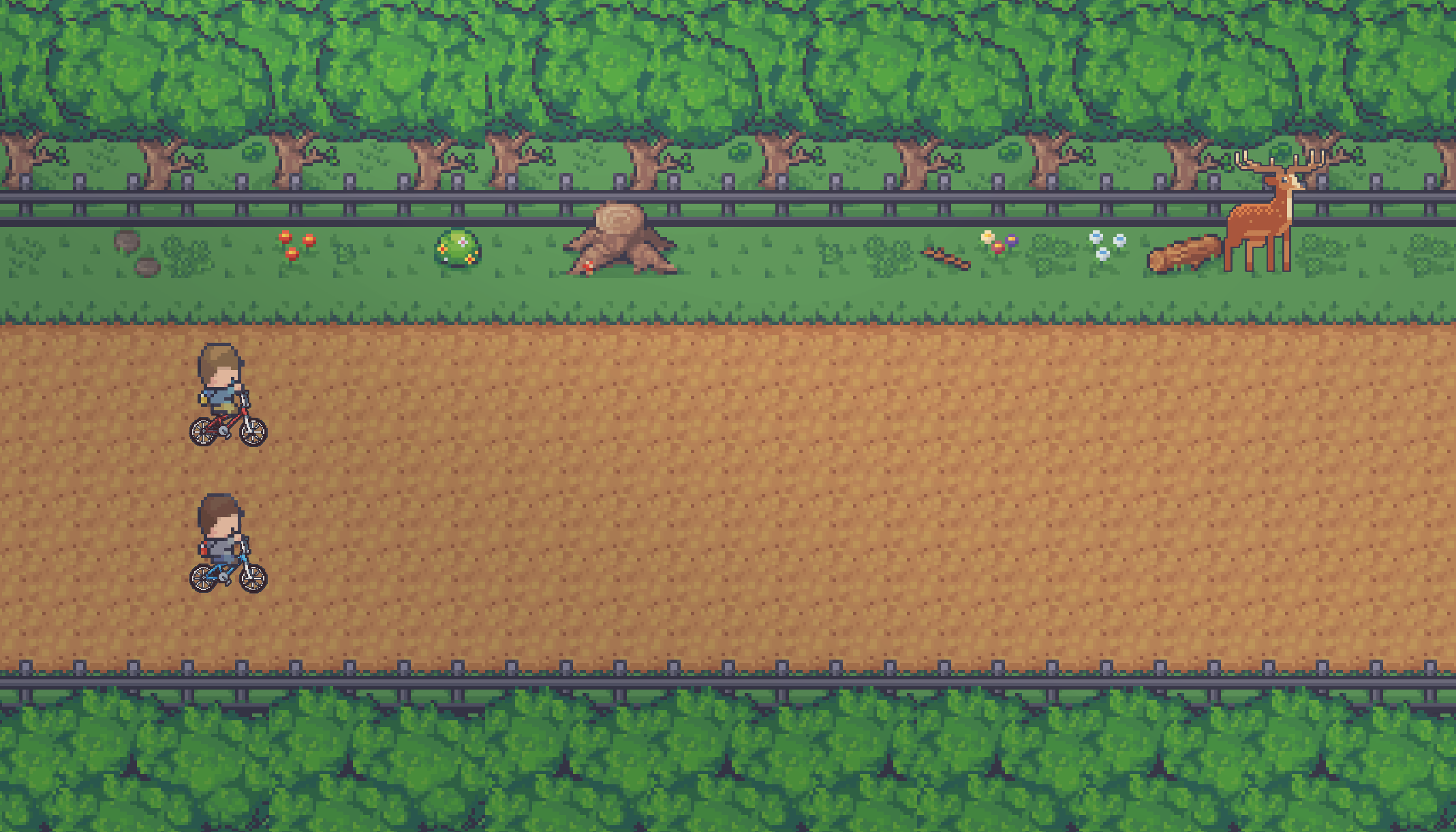
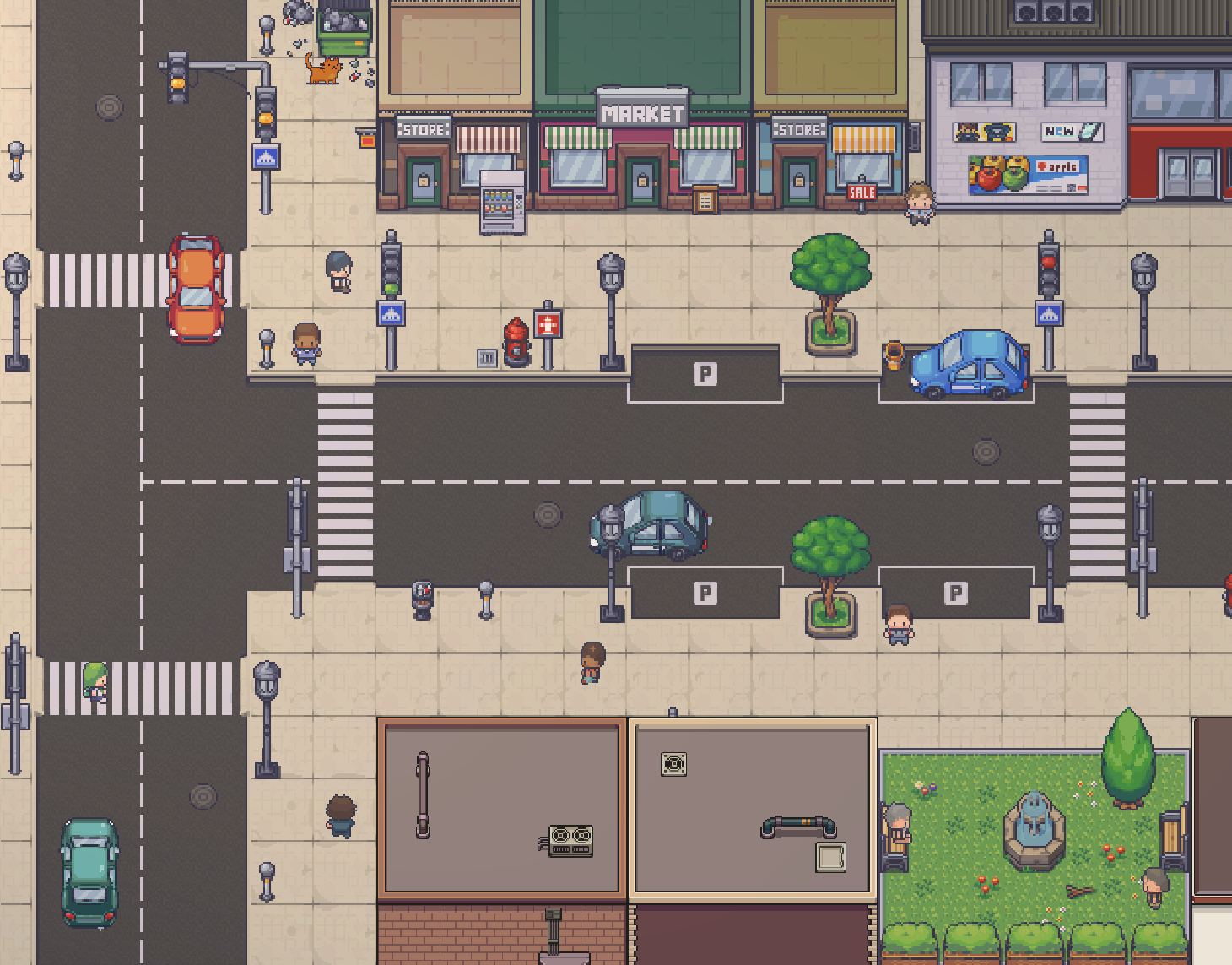
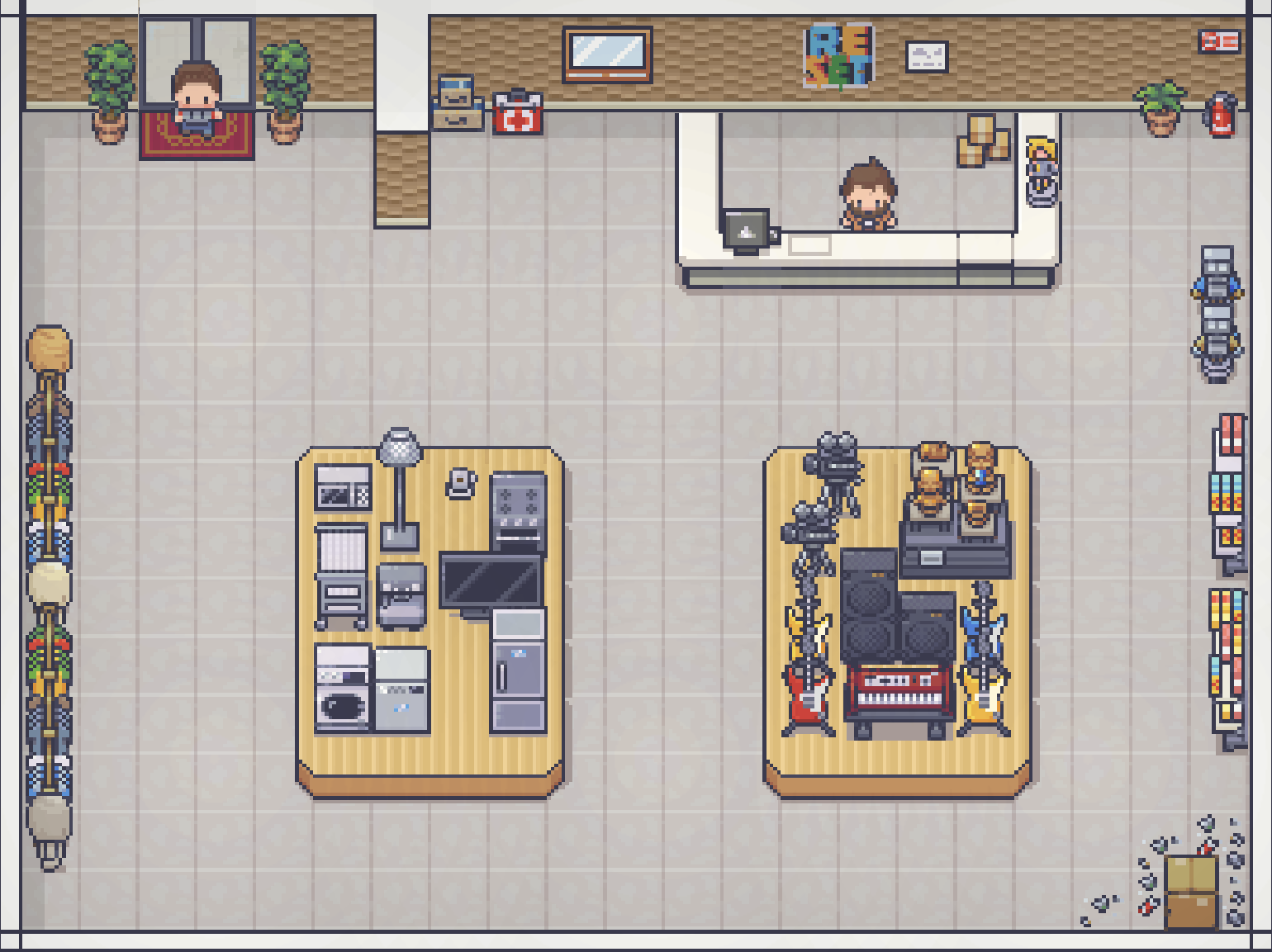
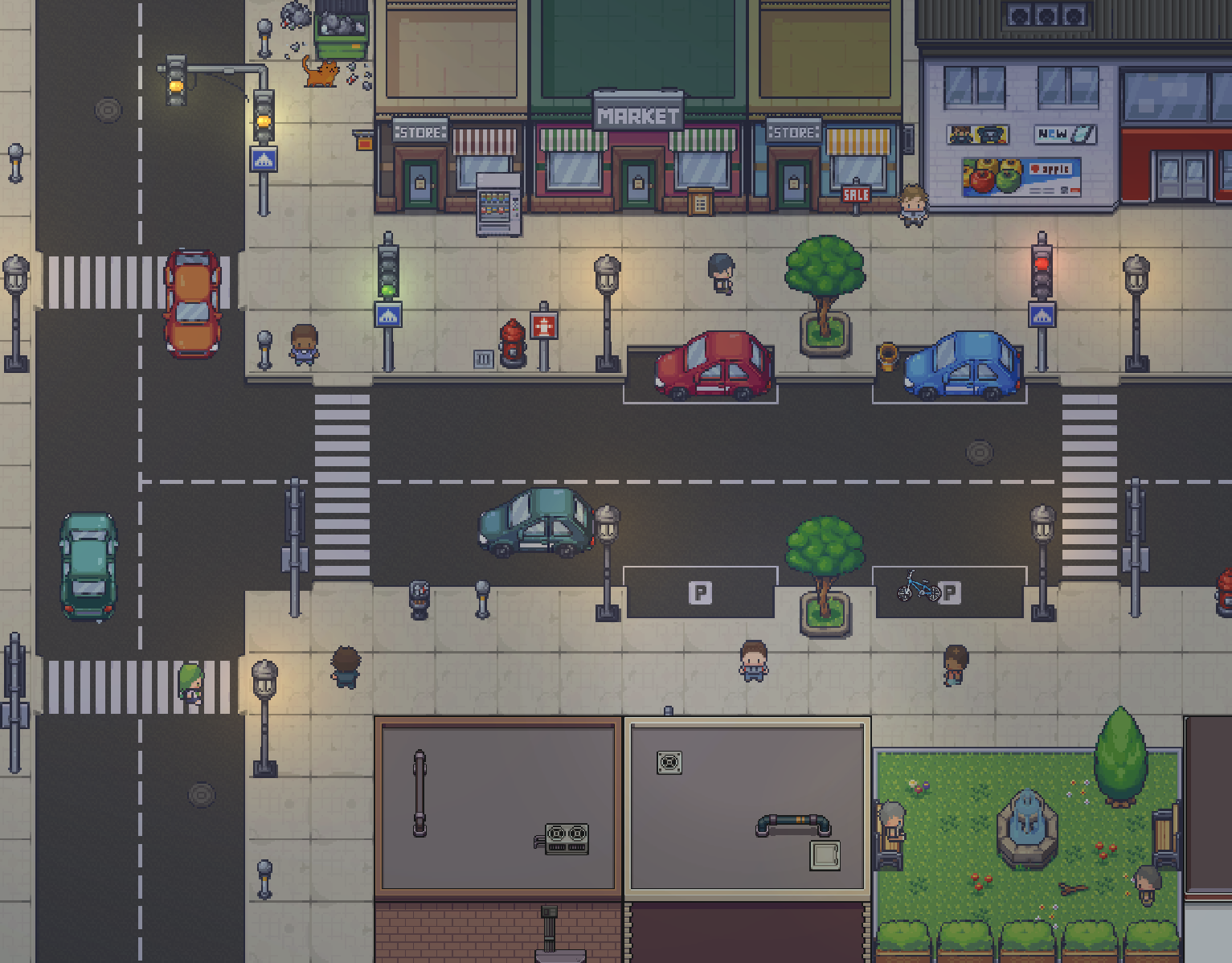
Gameplay
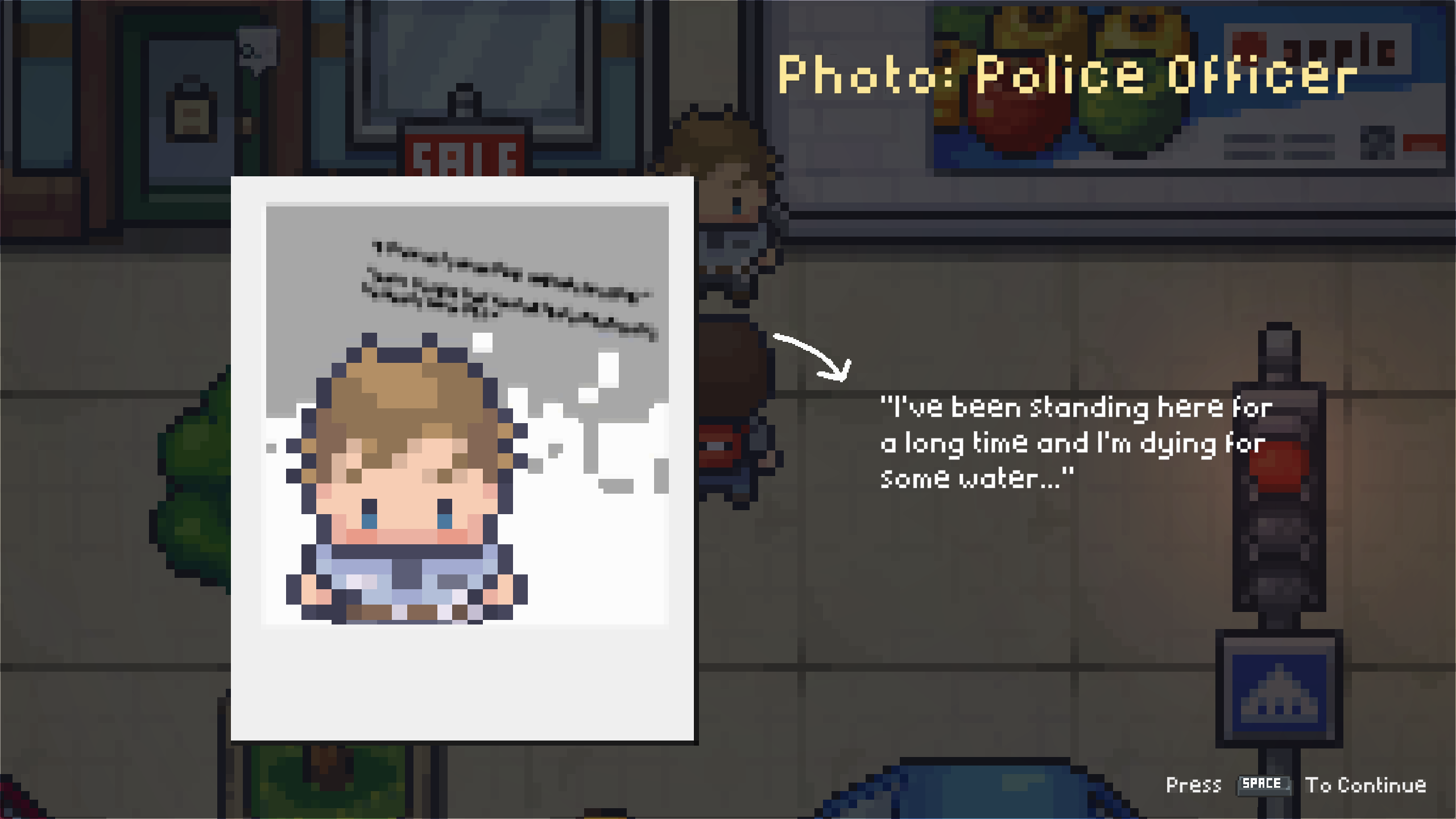
Photo Taking
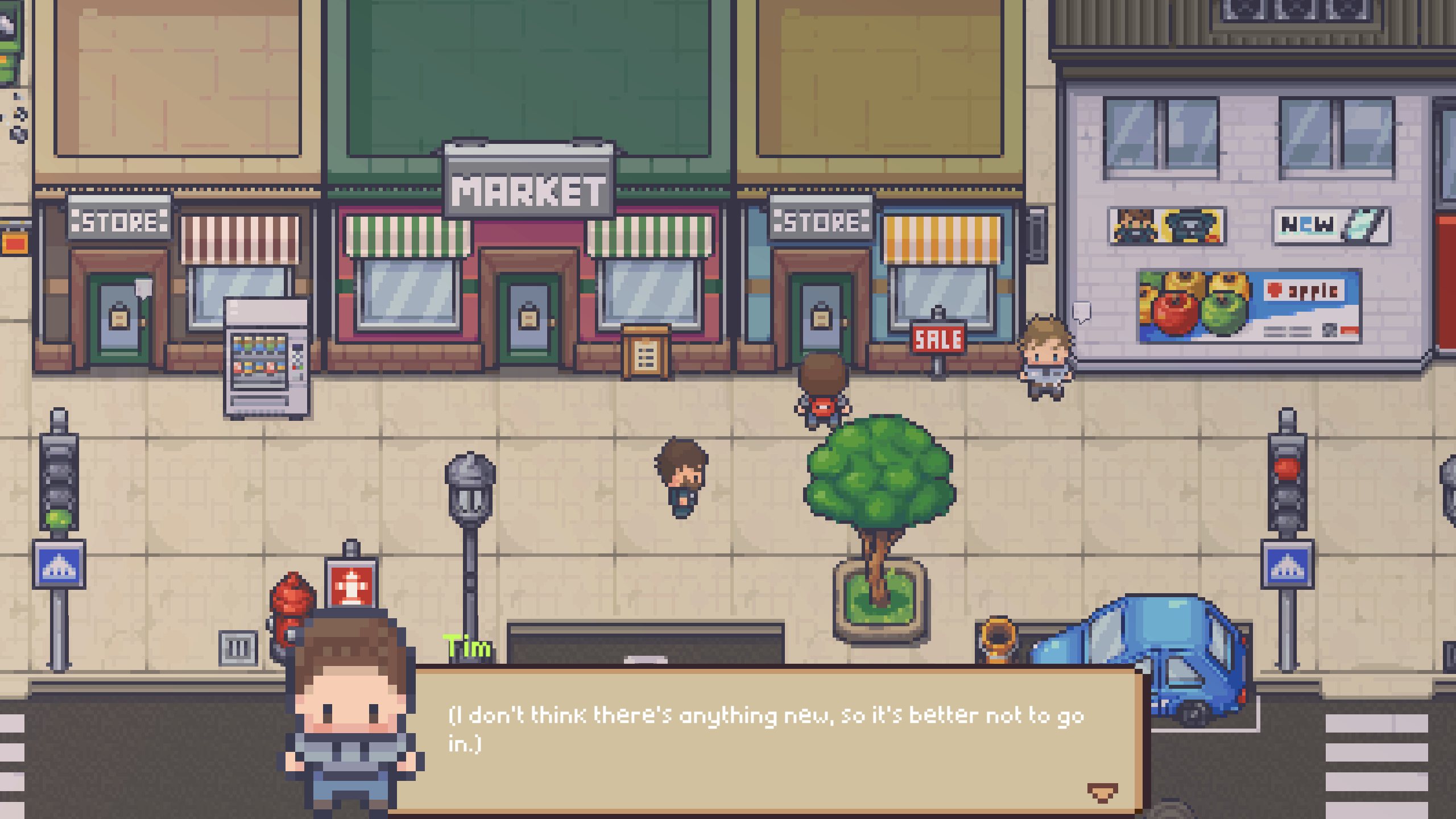
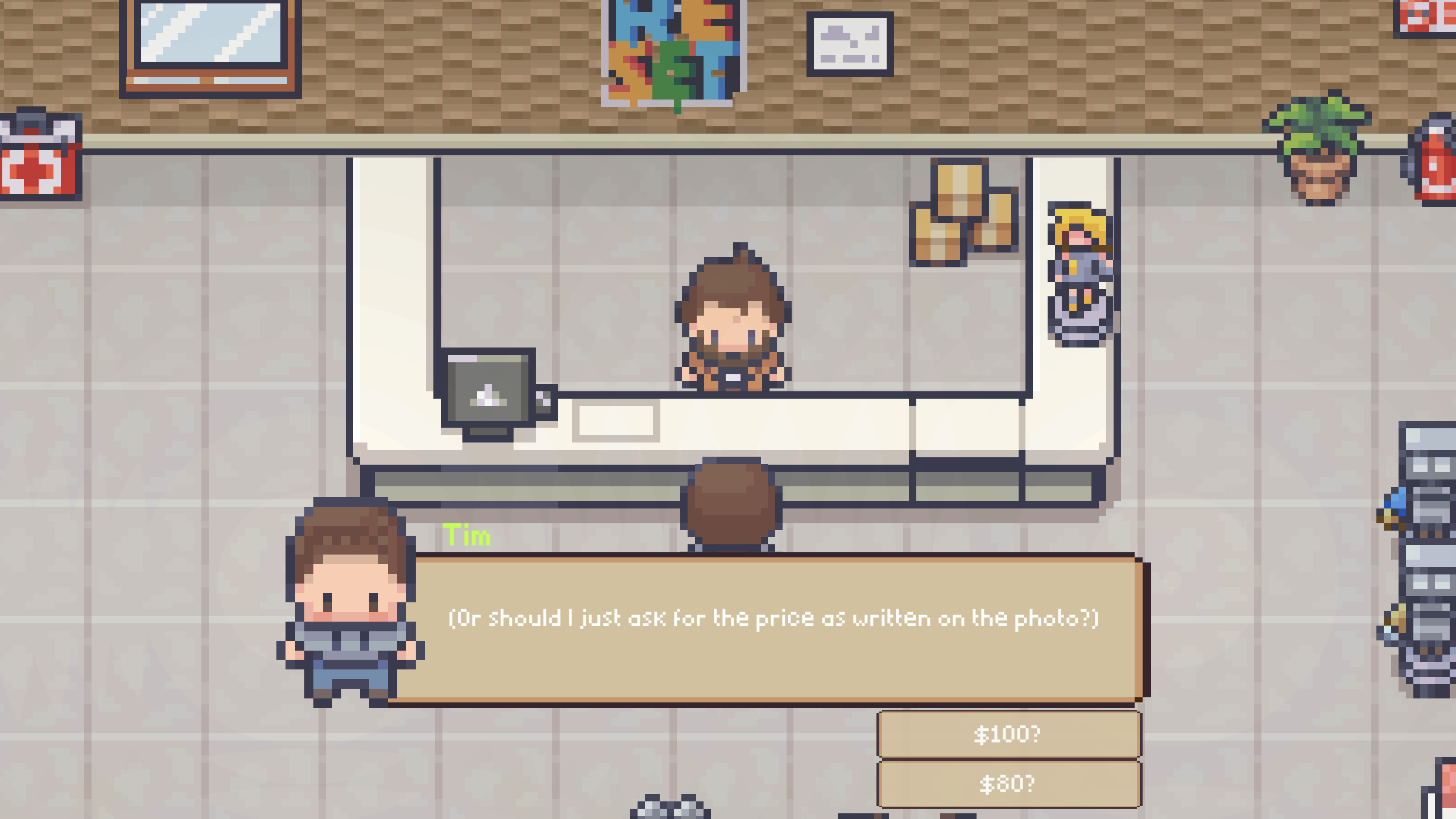
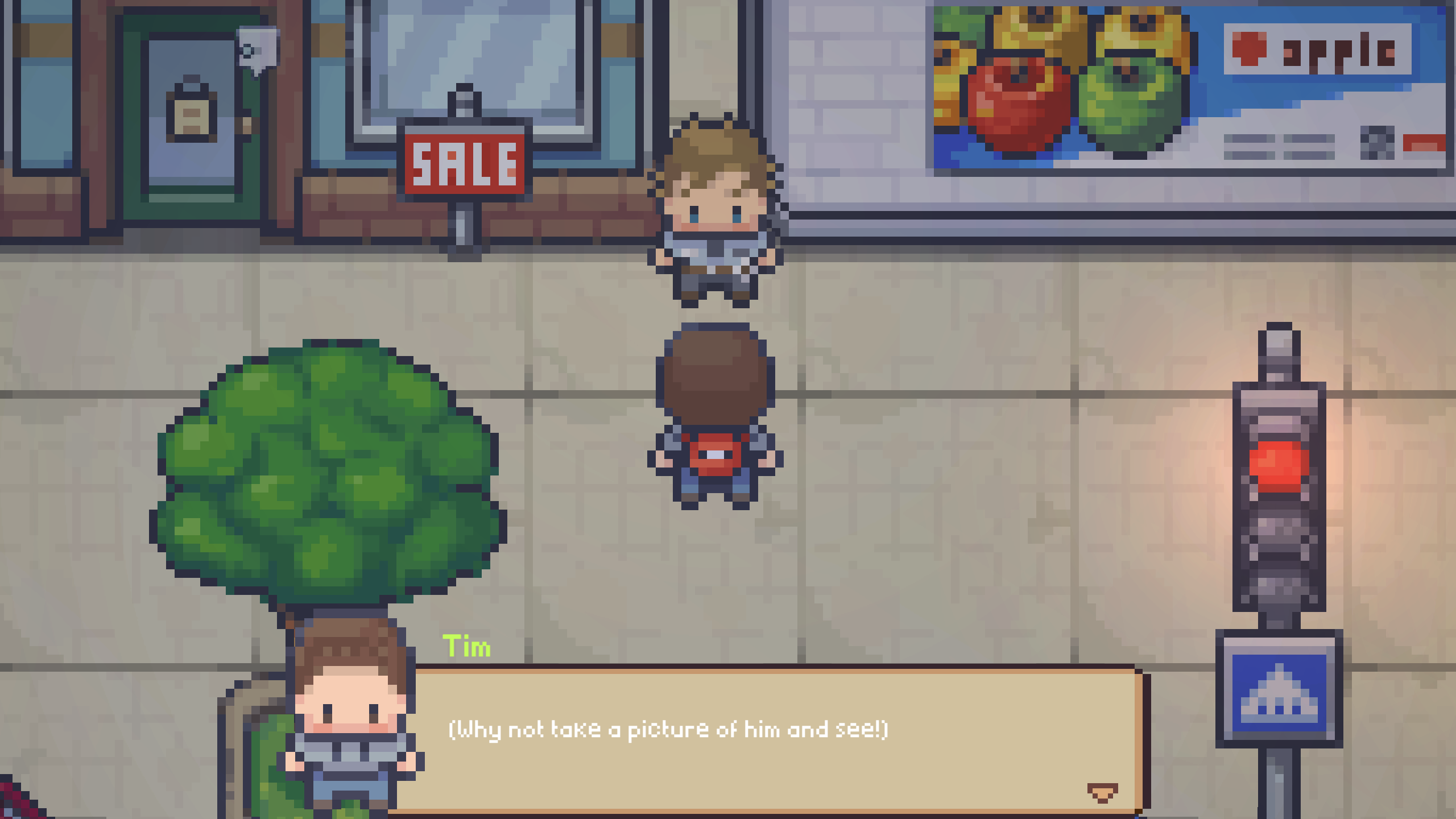
Players can photograph any NPC in the game, reading their inner thoughts through the developed photos to help solve their problems and gain favorability.
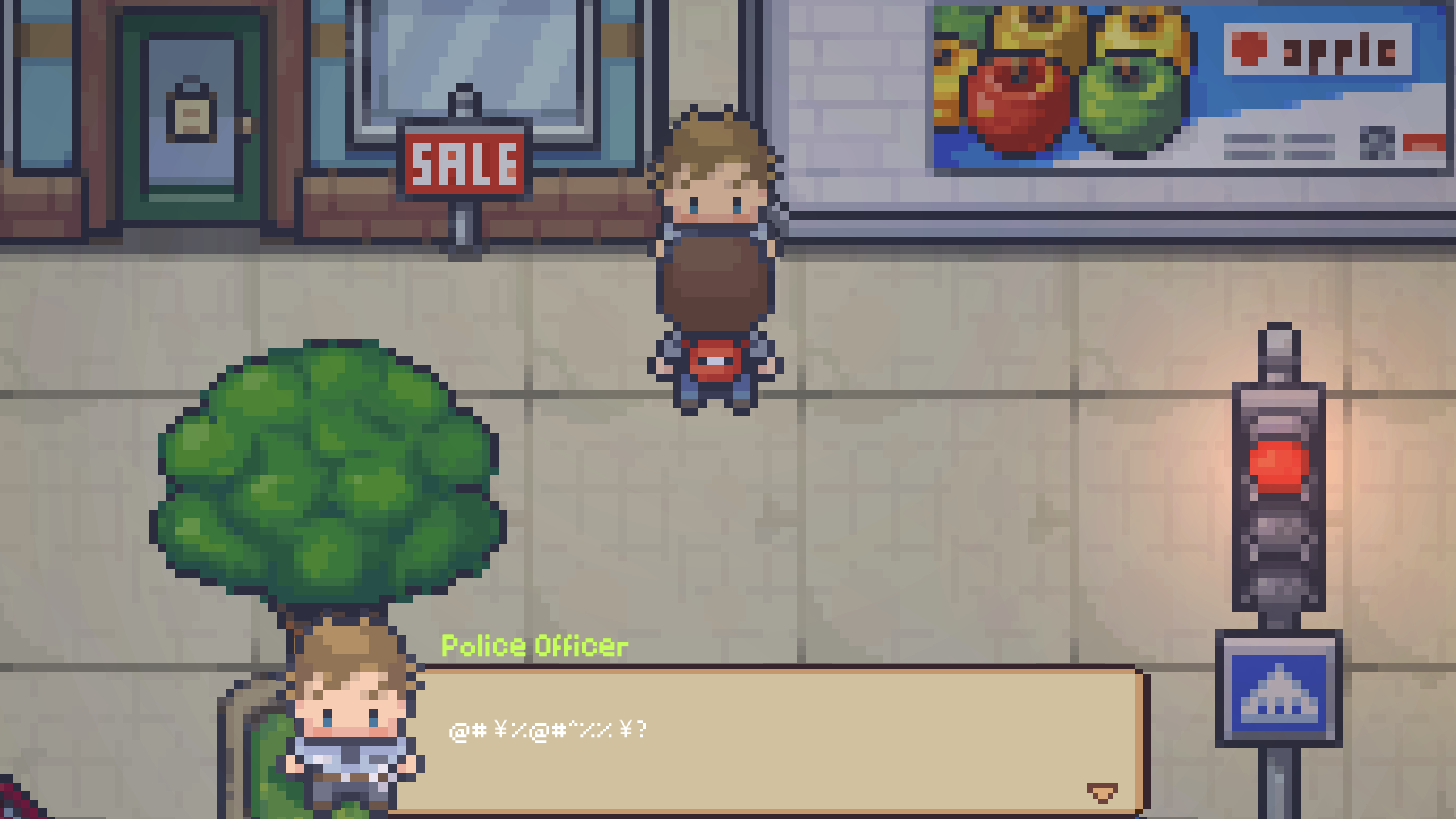
Dialogue
Dialogues have a chance to trigger garbled code. This allows players to experience the barriers to communication in autistic children and increase immersion.
Favorability System + Mission Structure
The game’s favorability system is used to evaluate the player’s actions and choices.
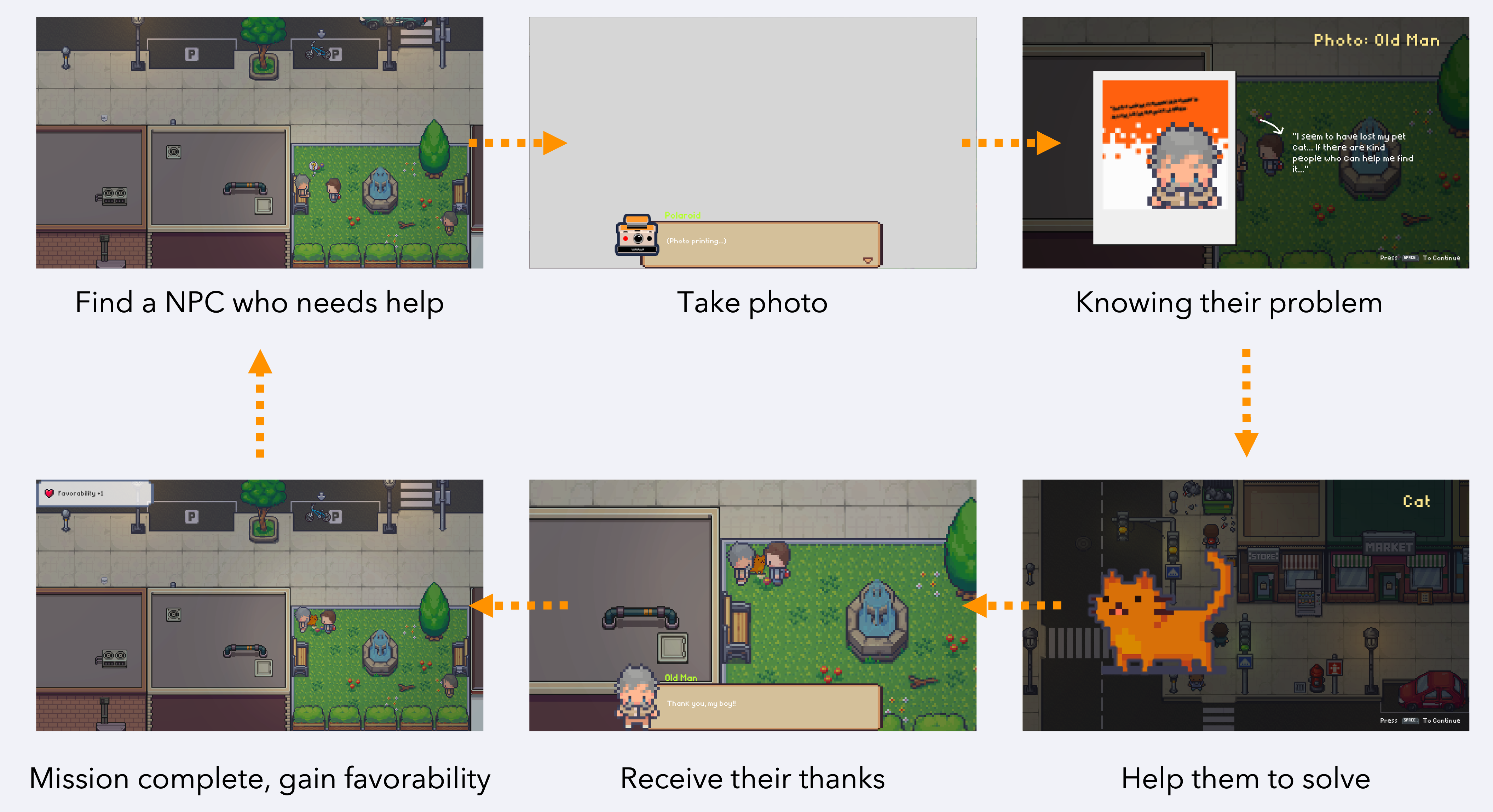
The favorability of the characters will affect the direction and ending of the story.
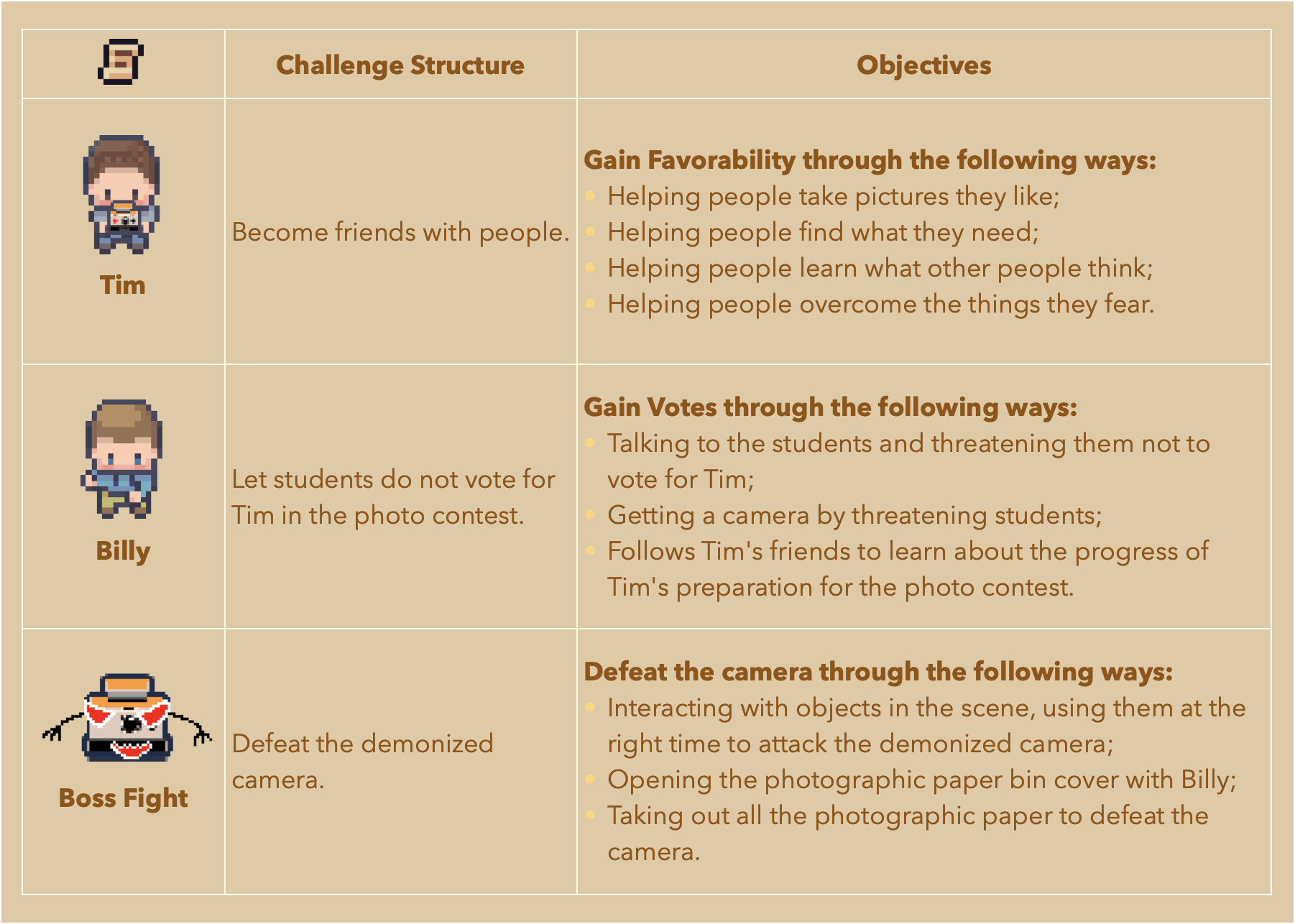
Challenge & Objectives
In Chapter 2, players will take on the roles of both Tim and Billy.
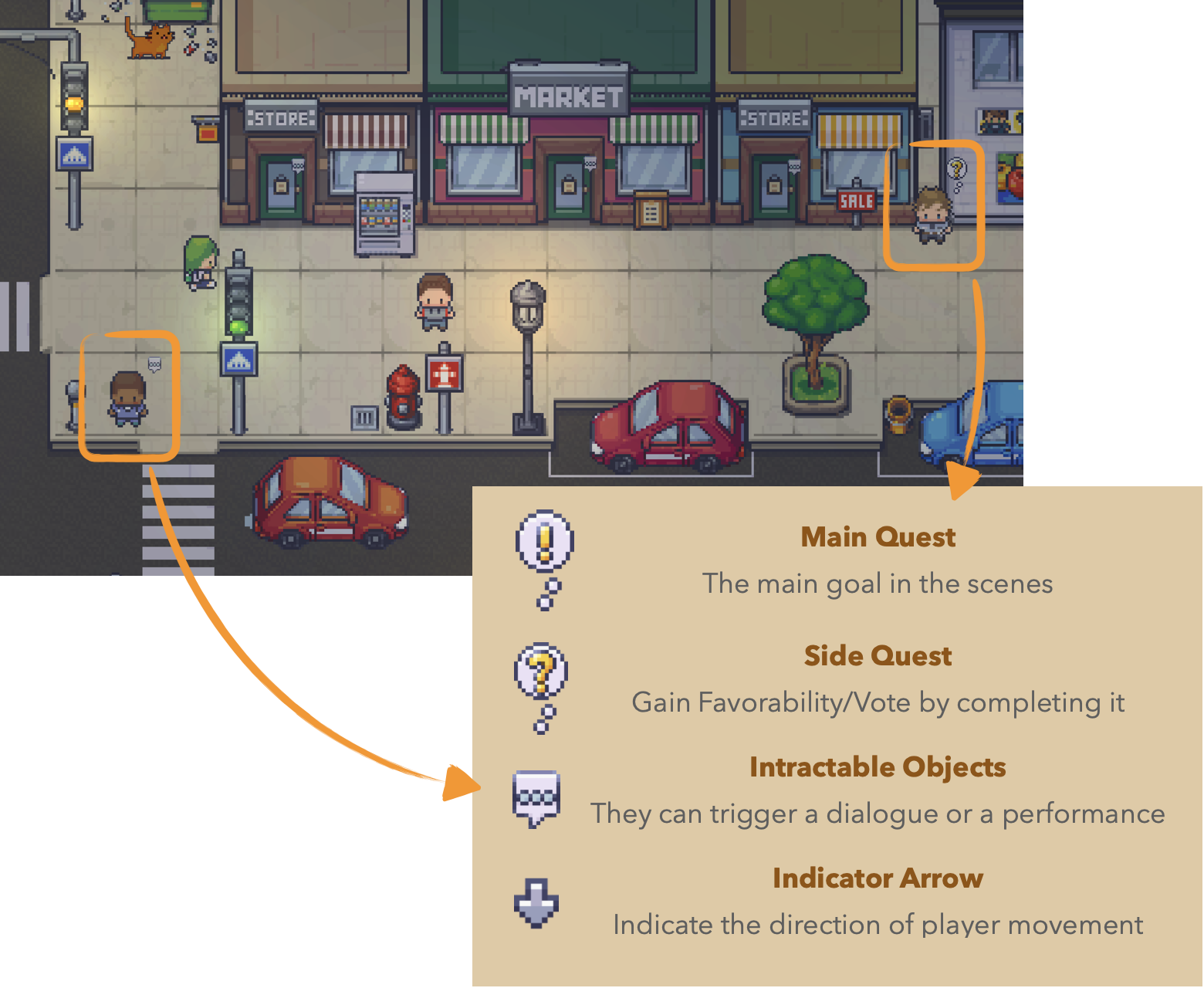
Guide Design
Easter Eggs
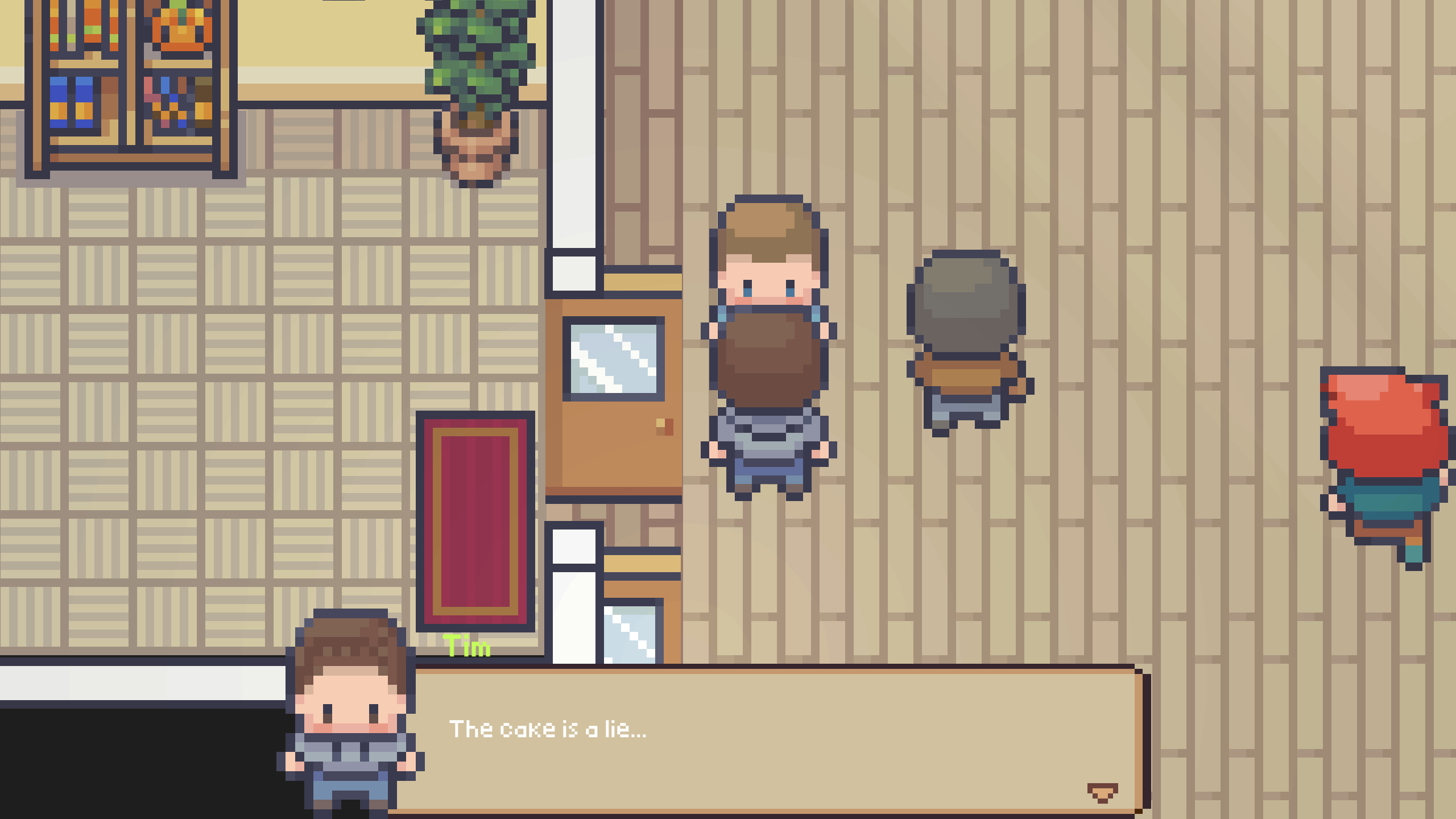
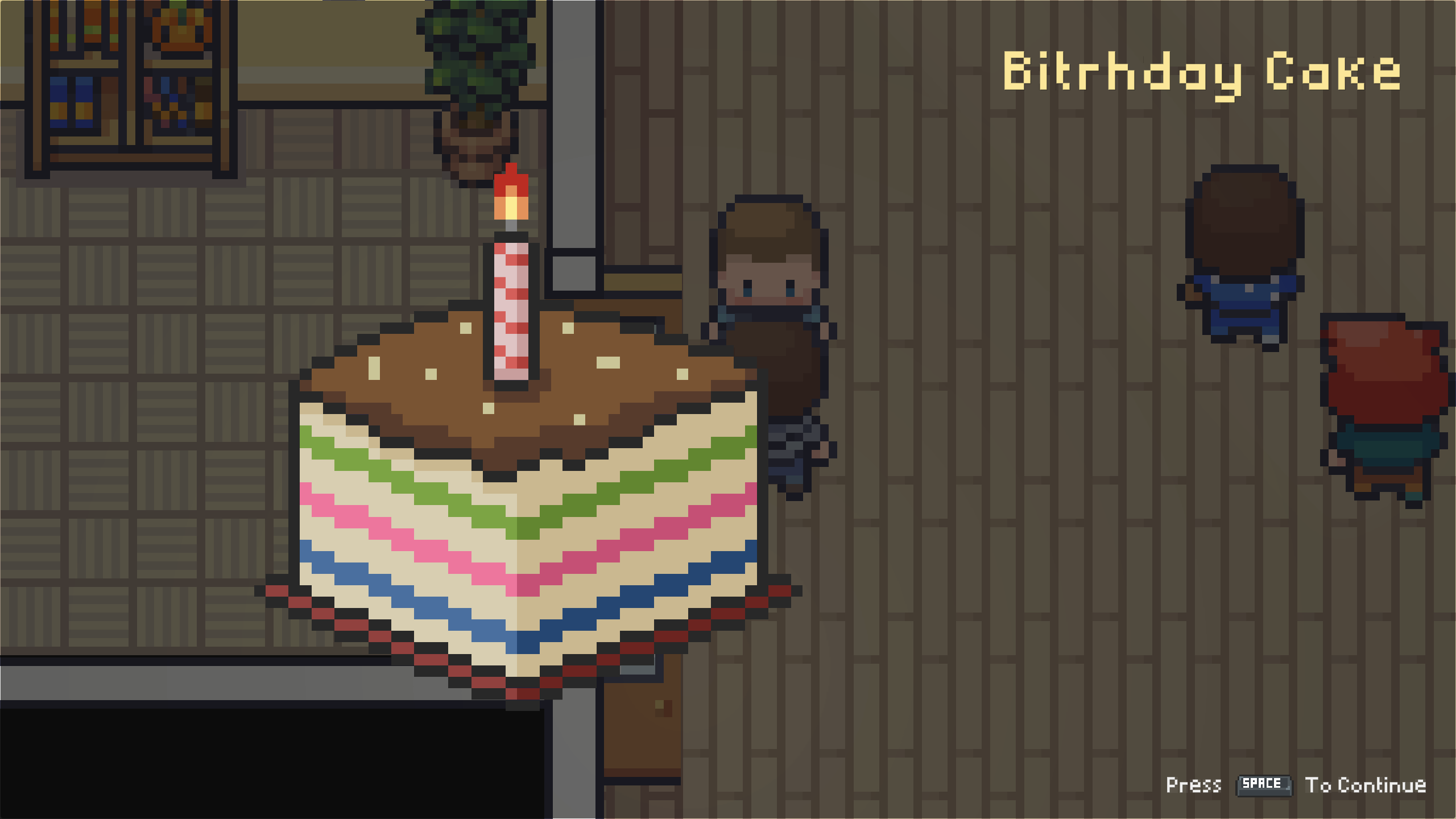
In Scene 2, after receiving his cake, Tim says the classic Portal 2 line “The cake is a lie.”
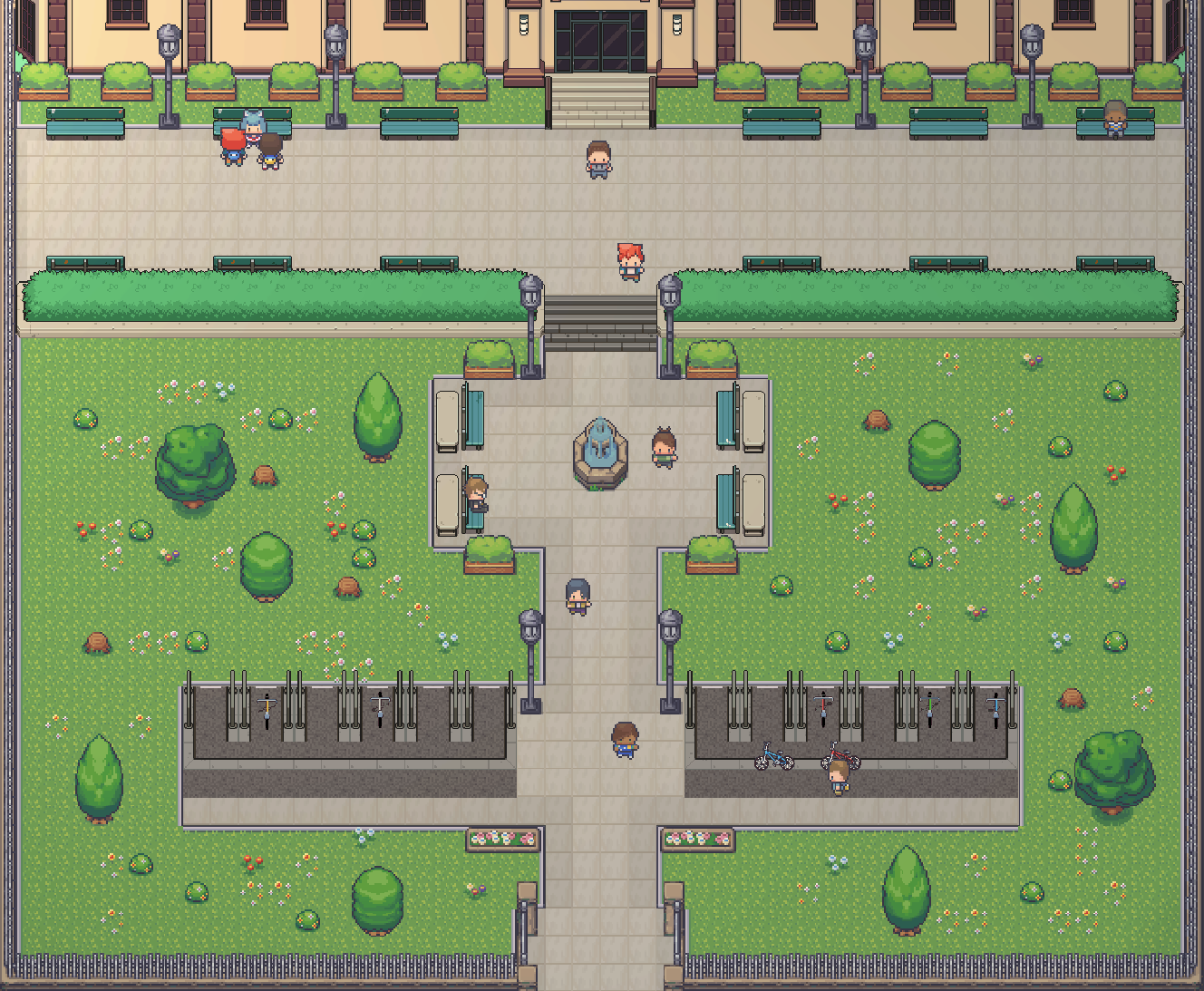
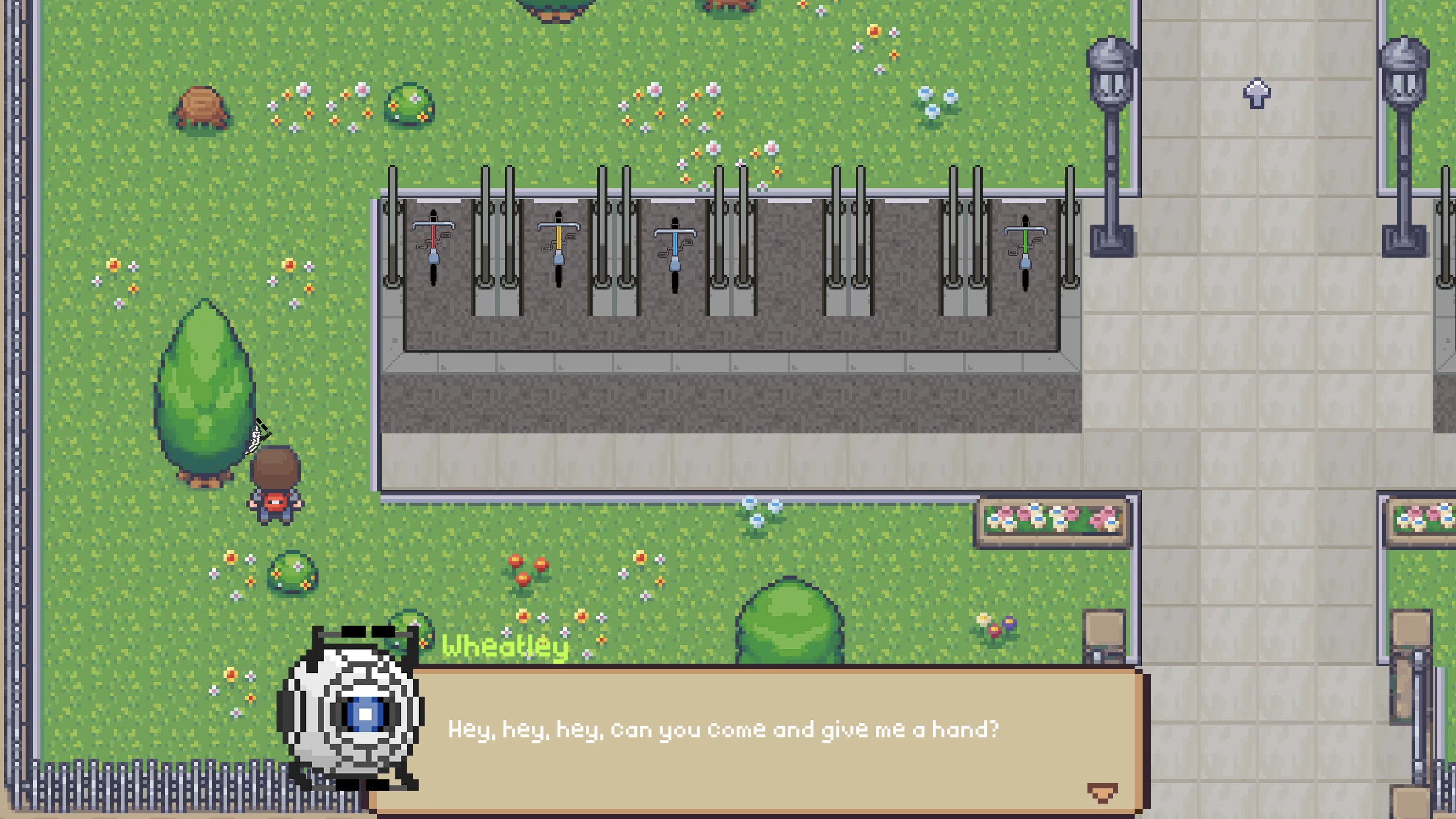
Wheatley from Portal 2 hides behind the tree in Scene 9, with hidden easter-egg dialogue.
Production Process
Dialogue System
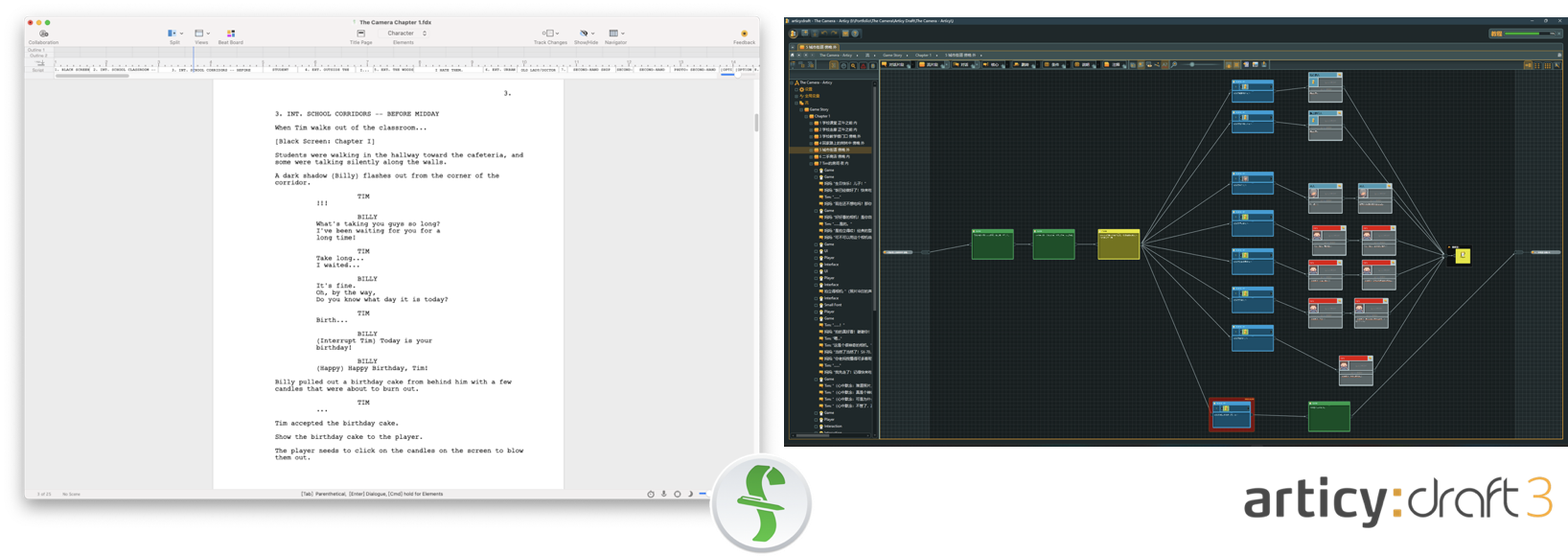
The dialogue for the game is written using Final Draft, while Articy Draft is used for validation.
Scene Design
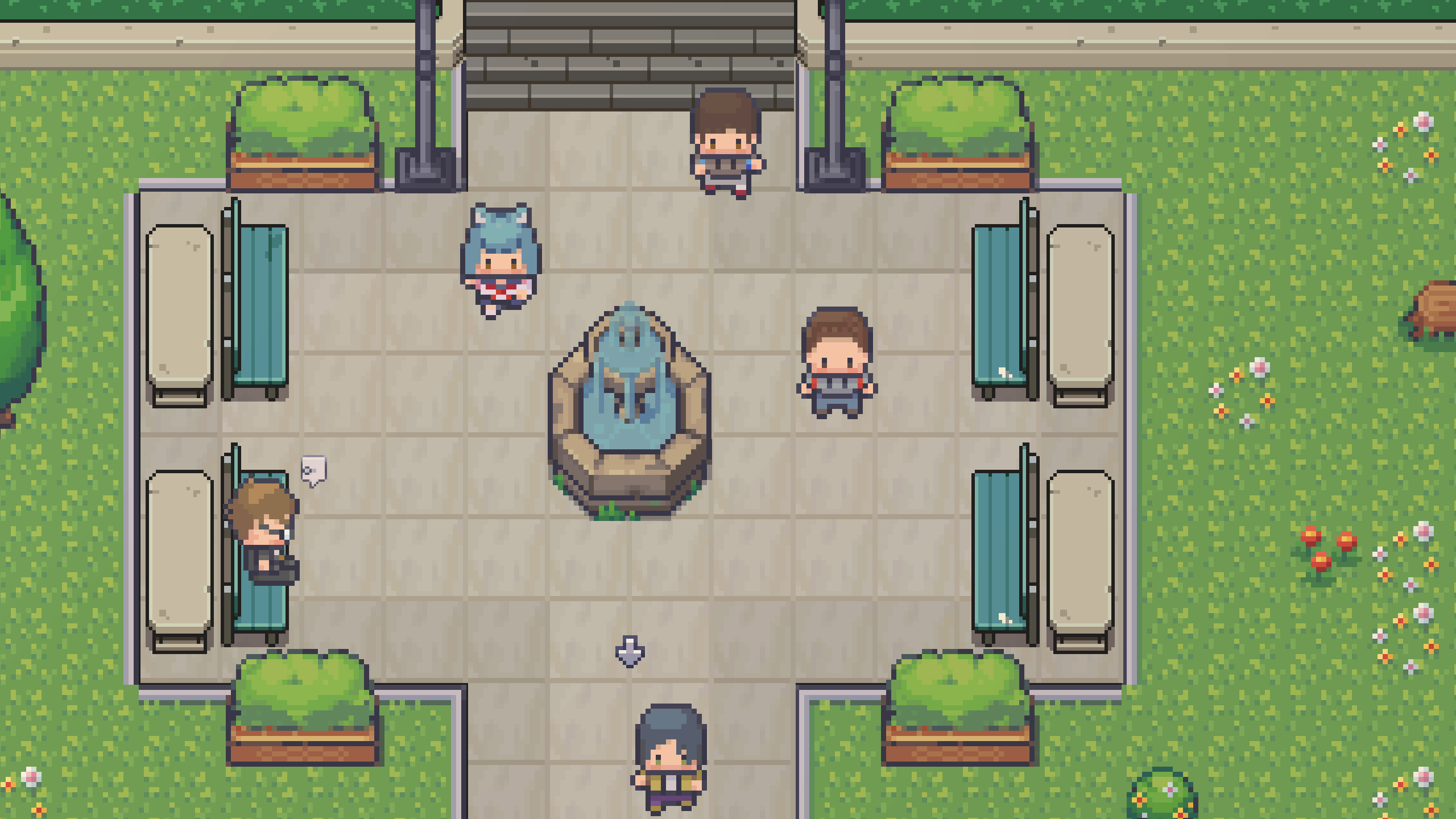
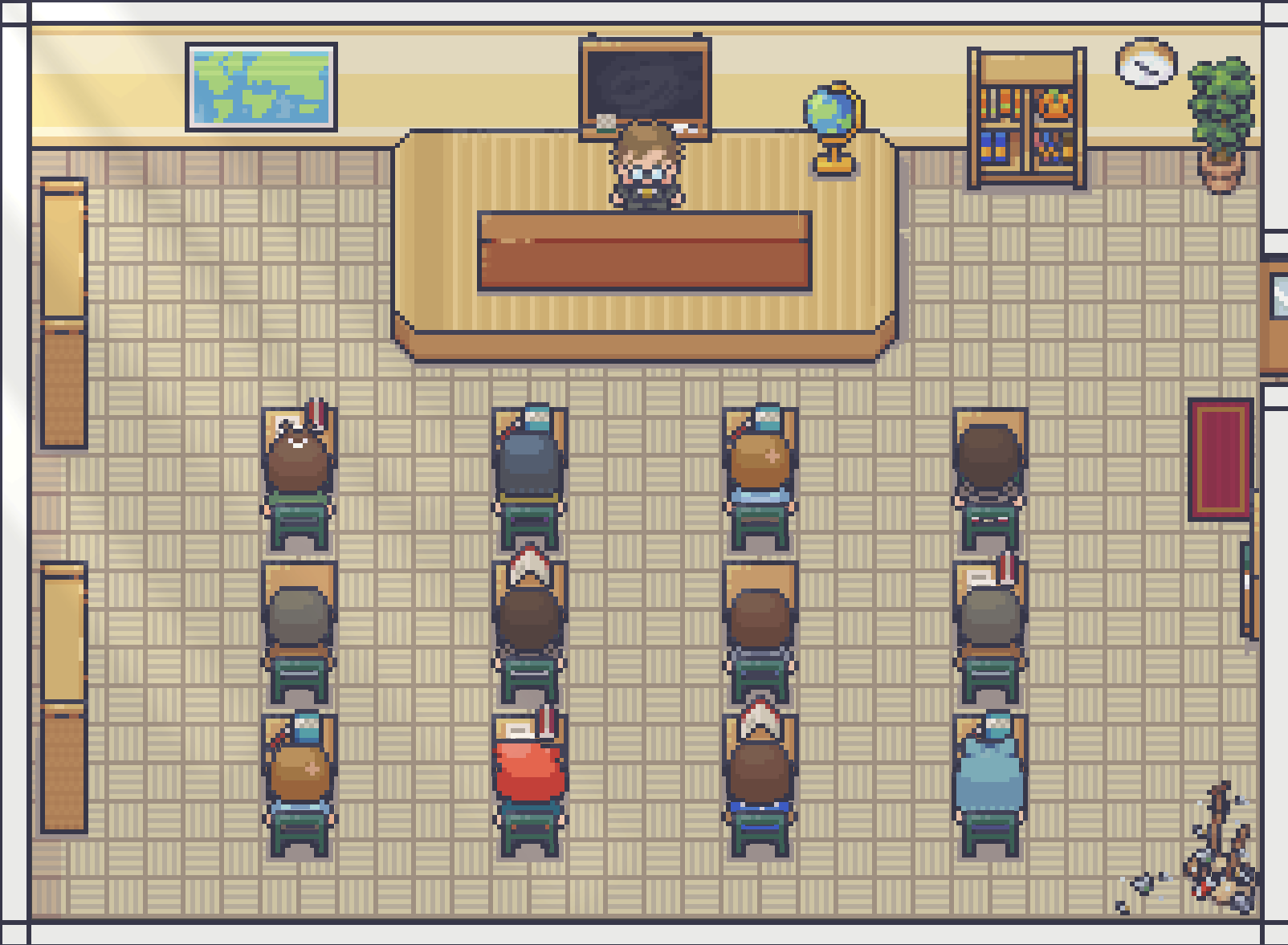
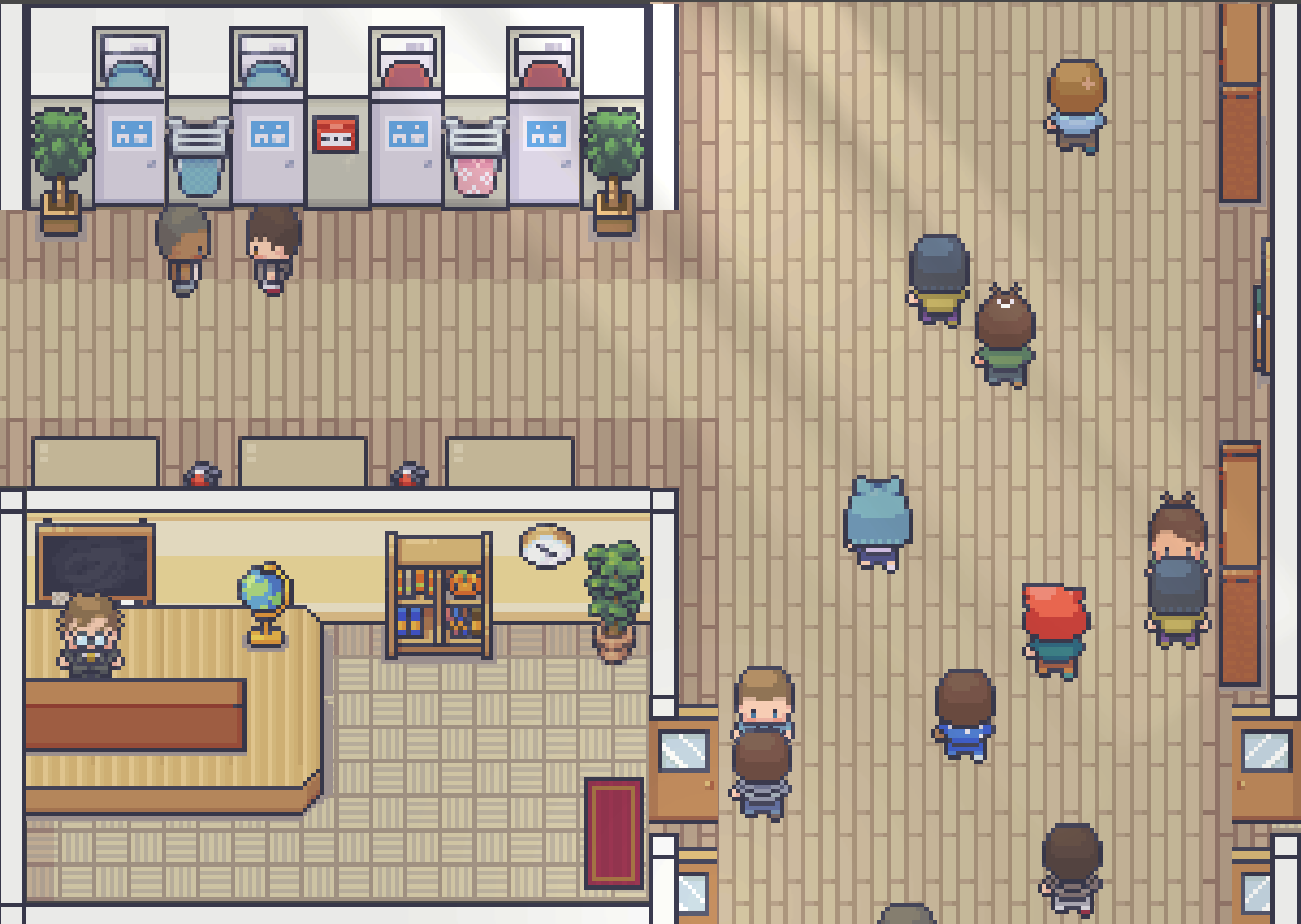
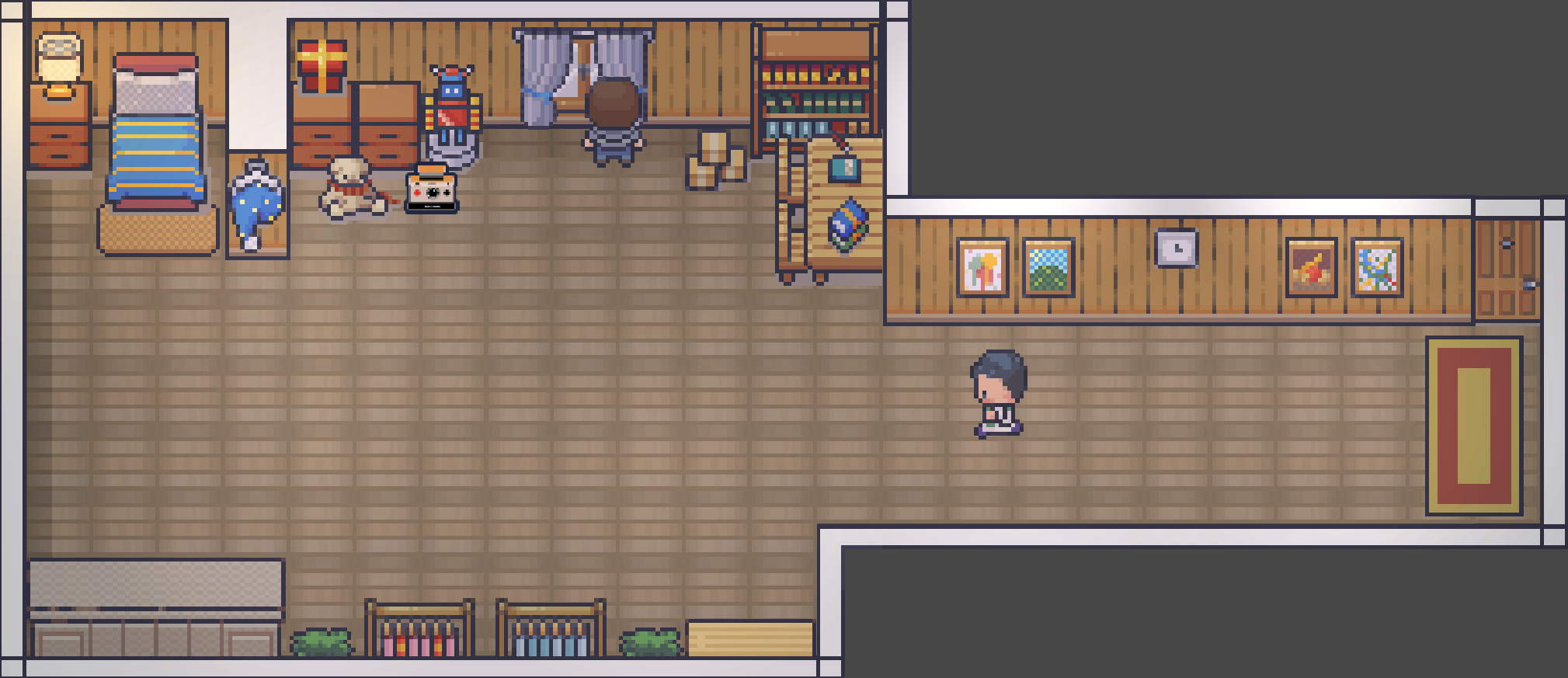
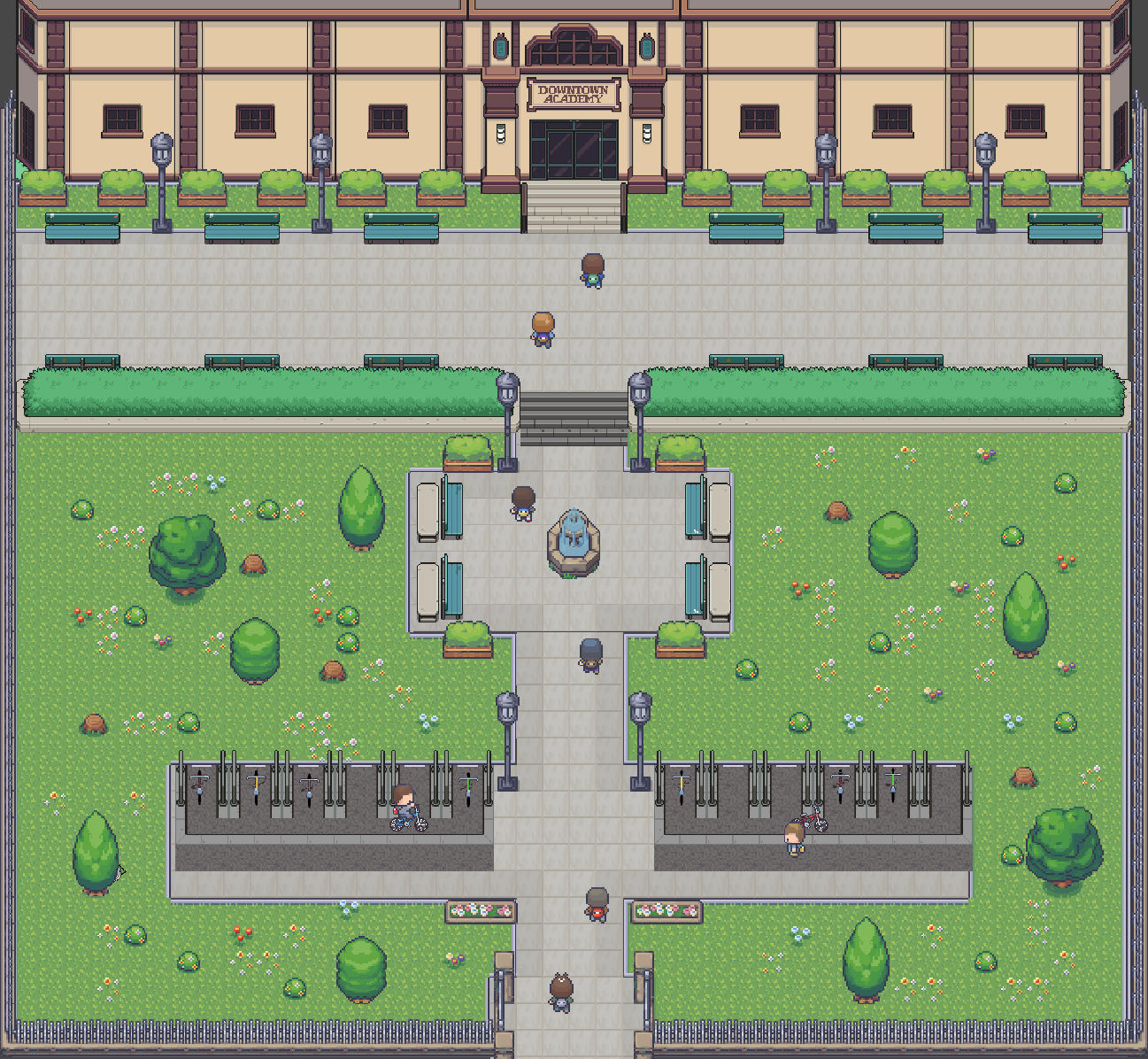
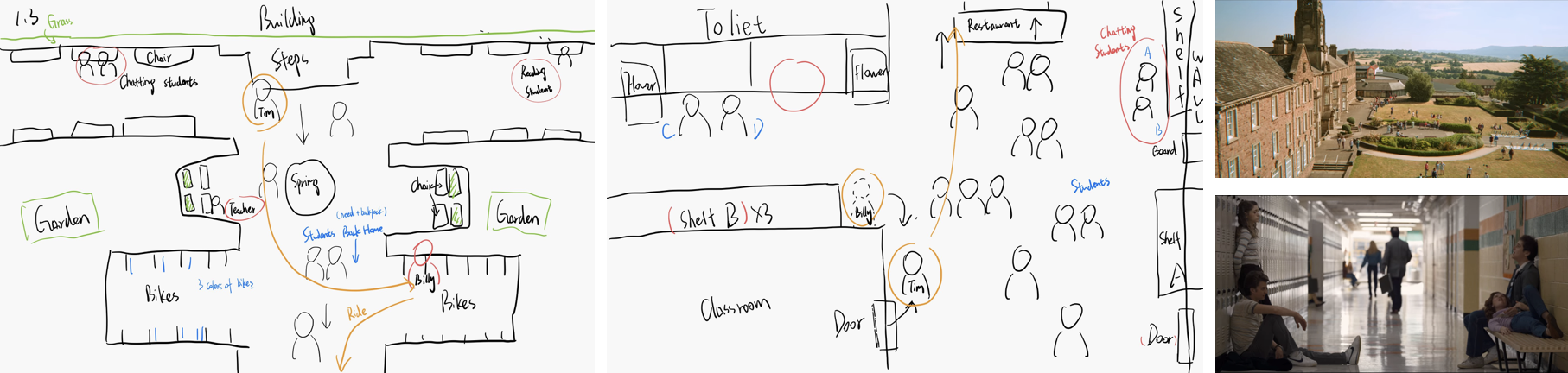
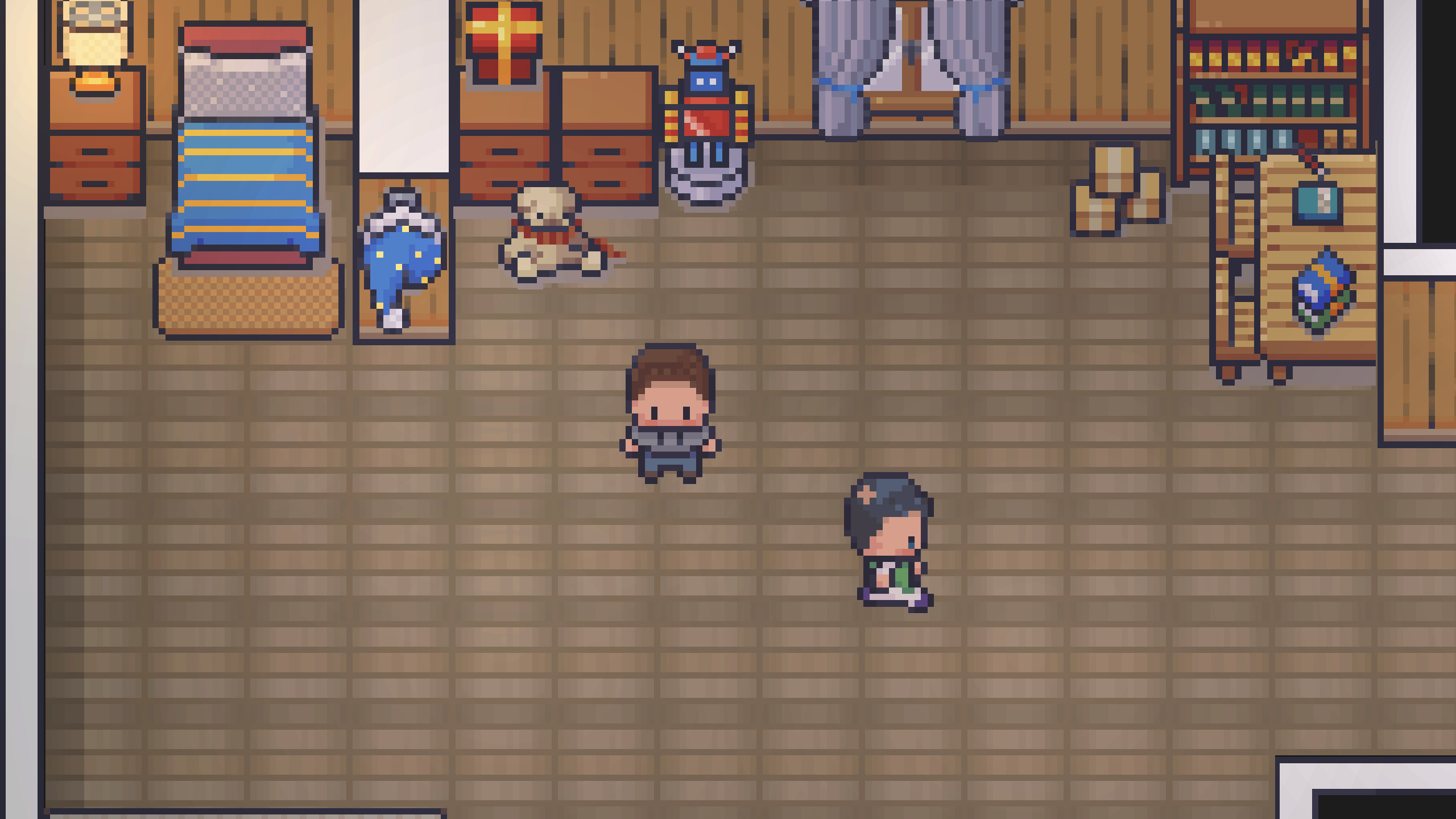
The scene design draws visual inspiration from the TV series Stranger Things and Sex Education; below are the scene layout drawings and design references.
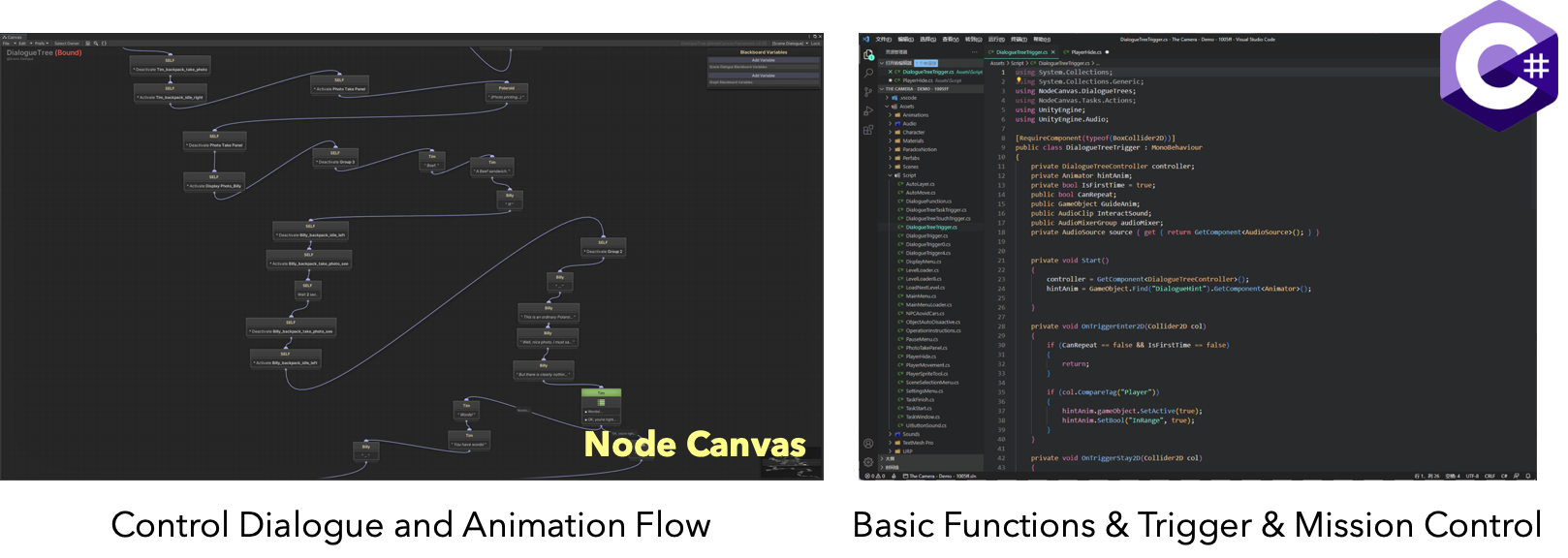
Game Flow Control
Cutscenes
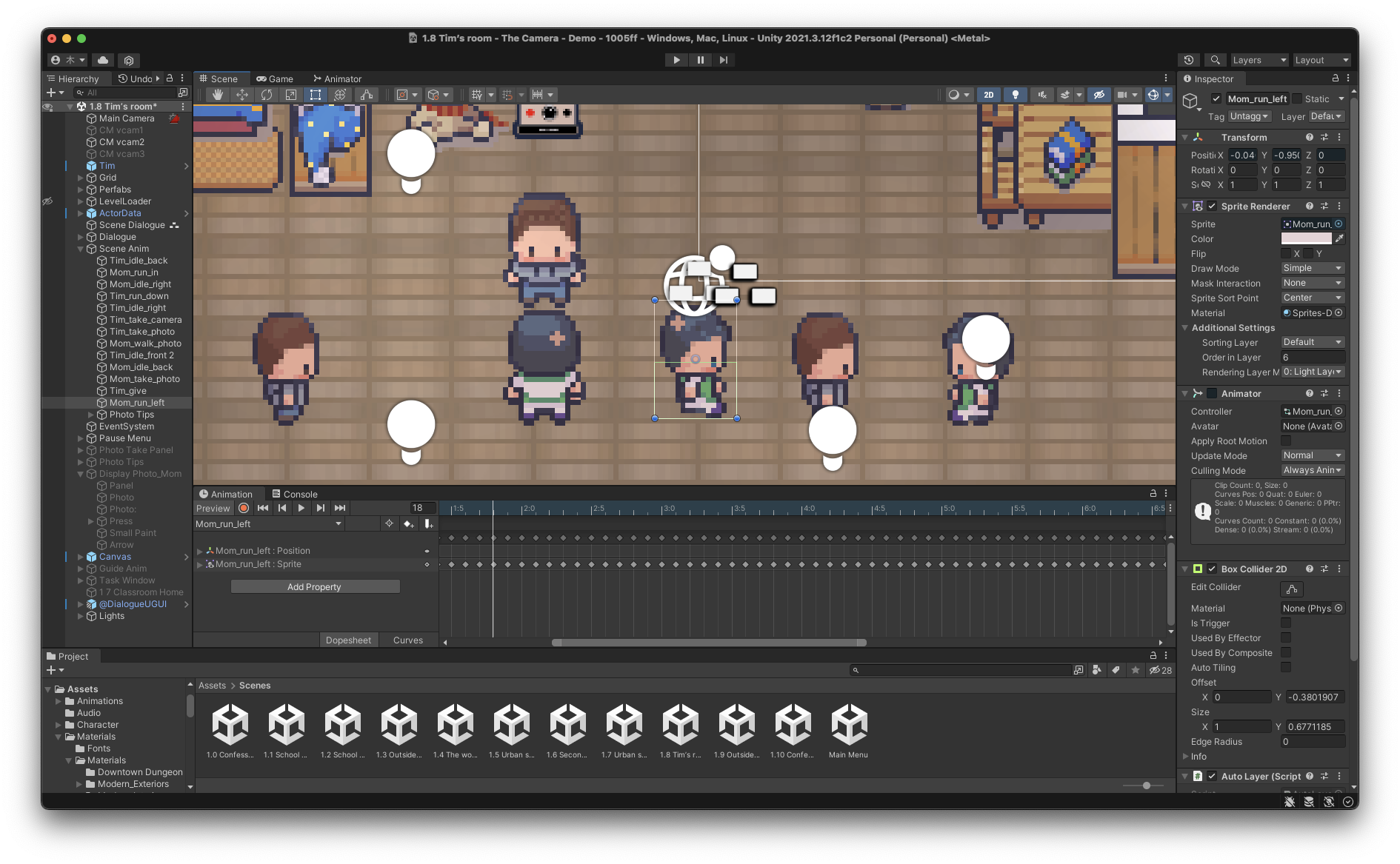
Cutscenes are created with Unity’s native Timeline module.
Music Production
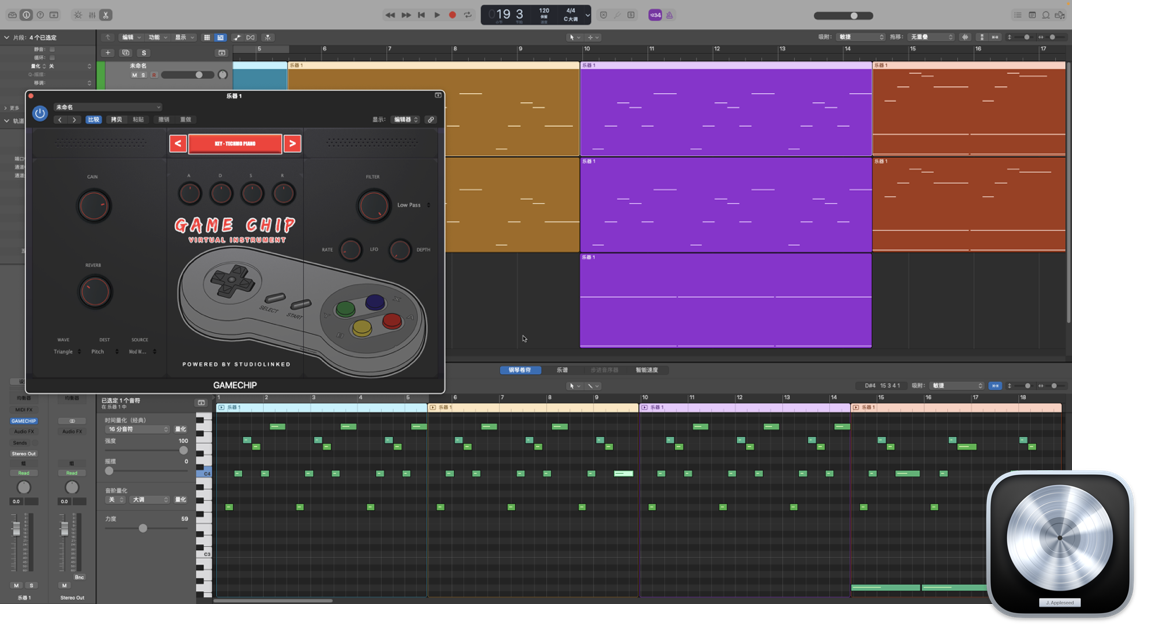
Using the GAME CHIP plugin and YMCK’s Magical 8-Bit Sound Plugin, I crafted distinctive 8-bit timbres and recorded them into a sequencer. I then used a step sequencer to arrange the notes bar by bar, carefully adjusting each bar’s note patterns to enrich the melodic variation.
Gallery